
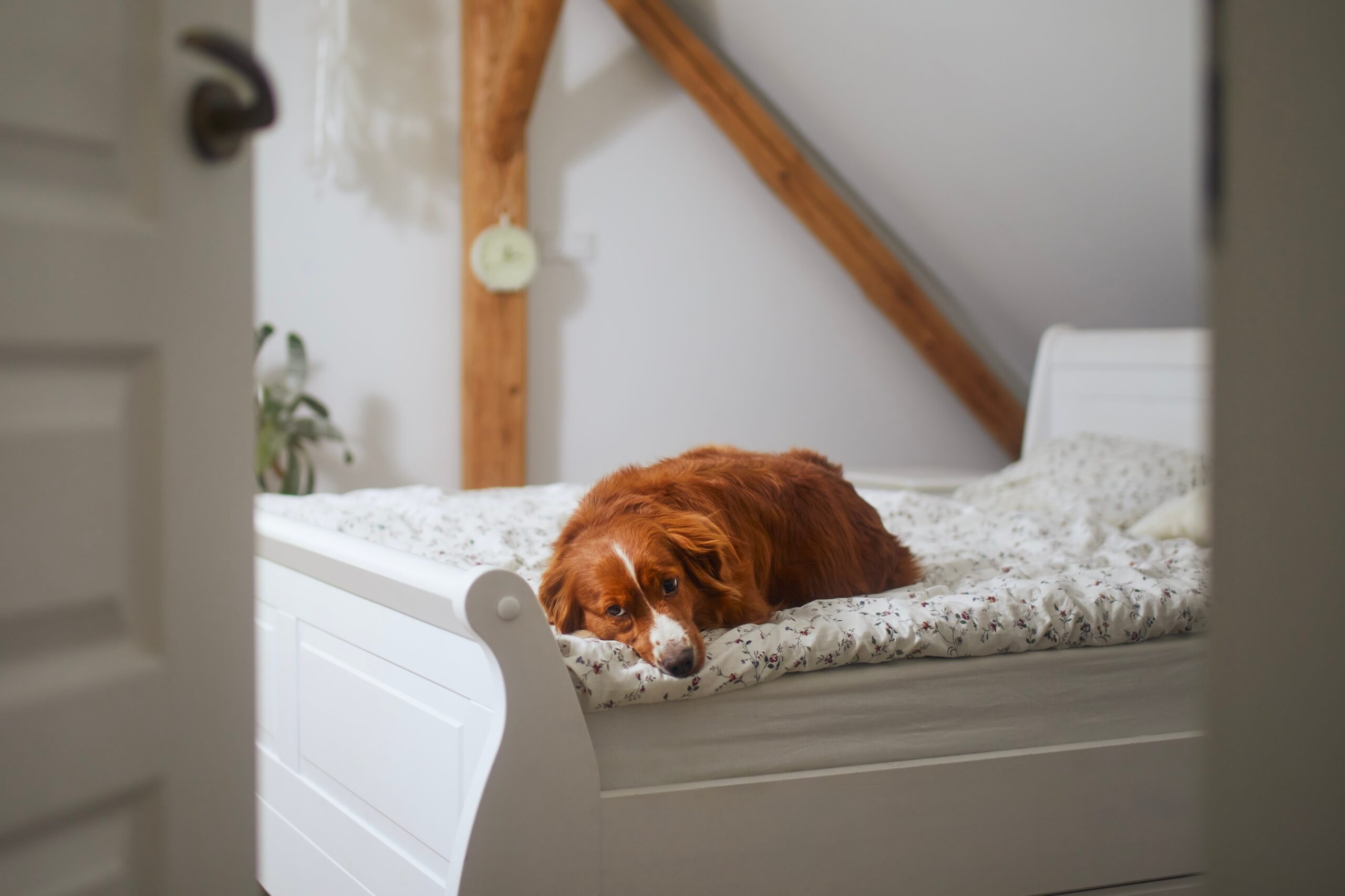
Separation anxiety is a condition where a dog becomes stressed and anxious when separated from their owner, even if only for short periods. This anxiety can manifest in various disruptive behaviors, such as destructive chewing, incessant barking, or attempts to escape. In more severe cases, dogs may experience physical symptoms like excessive drooling or pacing. The first step in managing this behavior is understanding what triggers it and how it impacts your dog’s well-being.
Signs of Separation Anxiety
Behavioral Signs
- Dogs suffering from separation anxiety often exhibit excessive barking or howling when left alone, which can be distressing for neighbors and indicative of deep-seated anxiety.
- Destructive behaviors, such as chewing furniture or digging at doors, are common as the dog attempts to cope with their distress.
- Additionally, some dogs may urinate or defecate indoors despite being house-trained, a sign of their acute stress.
Physical or Emotional Symptoms
- Other symptoms include attempting to escape from the home or their crate, often leading to self-injury.
- Dogs might also pace or show restlessness, indicating their inability to relax without their owner.
- Excessive drooling or panting can also occur, further showcasing their elevated stress levels.
- If these behaviors predominantly occur in your absence, your dog is likely experiencing separation anxiety.
Causes of Separation Anxiety
Several factors can contribute to the development of separation anxiety in dogs. Understanding these causes is vital to addressing the root of the problem and helping your pet overcome their anxiety. By identifying what triggers your dog’s anxiety, you can take proactive steps to mitigate these stressors.
- Dogs thrive on routine and predictability, and significant changes in their environment or daily schedule can be unsettling.
- Moving to a new home can be particularly stressful, as dogs are creatures of habit and may feel disoriented in unfamiliar surroundings.
- Changes in a work schedule that alter the amount of time spent with your pet can trigger anxiety.
- The loss of a family member or another pet can also lead to separation anxiety, as dogs may struggle to adapt to the absence of a familiar companion.
Routine disruptions can leave your dog feeling uncertain and insecure, leading to increased anxiety levels. Maintaining as much consistency as possible in their daily routine can help mitigate these effects. Gradually introducing changes and providing comfort during transitions can also ease their anxiety.
Lack of Socialization
Socialization is a crucial aspect of a dog’s development, and those that have not been properly socialized may be more prone to anxiety. Early exposure to various people, environments, and experiences is essential for developing a well-adjusted dog. Dogs that have limited interactions with the world outside their home may become fearful or anxious when faced with new situations.
Proper socialization helps dogs build confidence and adaptability, reducing the likelihood of anxiety. Engaging your dog in regular social activities, such as playdates or training classes, can improve their social skills and help them become more comfortable in different settings. This exposure can be particularly beneficial for alleviating separation anxiety.
Genetics
Genetic factors can also play a role in a dog’s likelihood of developing separation anxiety. Some breeds are more prone to anxiety than others, particularly those bred for companionship or protection. Breeds that form strong attachments to their owners may experience heightened anxiety when left alone, as their natural inclination is to remain close to their human companions.
Understanding your dog’s breed-specific traits can help you anticipate potential anxiety issues. While genetic predispositions cannot be changed, being aware of them allows you to take proactive steps in training and environment management to minimize anxiety. Tailored strategies can be developed to address the specific needs of breeds prone to separation anxiety.
Managing Separation Anxiety
Successfully managing separation anxiety requires a thoughtful and patient approach. By employing a combination of strategies, you can help your dog feel more comfortable and secure when left alone. Consistency and positive reinforcement are key components in alleviating your dog’s anxiety.
Gradual desensitization is a method that involves slowly acclimating your dog to being alone, reducing their anxiety over time. Begin by leaving your dog alone for short periods, gradually increasing the duration as they become more comfortable with the absence. This incremental approach helps build their confidence and teaches them that being alone is not a cause for alarm.
Creating a Safe Space
It’s important to maintain a calm demeanor during this process, as dogs can pick up on their owner’s emotions. Start with small separations, such as stepping out of the room for a few minutes, and gradually progress to longer absences. Celebrate your dog’s success with praise or small rewards to reinforce positive behavior.
Providing your dog with a designated safe space can significantly impact their comfort when alone. This area should be a specific room or section of your home equipped with their bed, toys, and access to water. The goal is to make this space inviting and comfortable, so your dog associates it with positive experiences and security.
Consider incorporating calming elements, such as a piece of your clothing or a soft blanket, to provide reassurance. Ensuring the area is free from hazards and distractions will help your dog feel more at ease. Over time, your dog will learn to retreat to this space when they need comfort, reducing their anxiety when you’re not home.
Establishing a Consistent Routine
Dogs find comfort in routine, and establishing a consistent daily schedule can help reduce their anxiety. Regular feeding times, walks, and play sessions provide structure and predictability, creating a sense of security for your pet. By maintaining a routine, you can help your dog understand what to expect each day, minimizing stress caused by uncertainty.
Consistency is crucial, so try to adhere to the routine as closely as possible, even on weekends or days off. This stability helps your dog feel more grounded and confident, reducing the likelihood of anxiety-related behaviors. Over time, a well-established routine can greatly enhance your dog’s overall sense of well-being.
Positive Reinforcement
Positive reinforcement is a powerful tool in managing separation anxiety. Reward your dog for calm behavior when you prepare to leave or return home, reinforcing the idea that being alone can be a positive experience. Providing treats, praise, or affection for desired behaviors helps your dog associate being alone with rewards rather than fear.
Avoid making a fuss when leaving or returning home, as this can heighten your dog’s anxiety. Instead, keep interactions low-key and matter-of-fact. Over time, your dog will learn that being alone is not a cause for concern, and their anxiety will diminish as a result.
Seeking Professional Help
If your dog’s anxiety is severe or not improving with these strategies, seeking professional help may be necessary.
Consult your veterinarian to evaluate potential medical causes and behavioral causes of anxiety. Your veterinarian may recommend diagnostic tests such as blood screenings or X-rays and may suggest medication therapy along with training.
A dog behaviorist or trainer specializing in separation anxiety can provide personalized guidance and support. These professionals can assess your dog’s specific needs and develop a tailored training plan to address their anxiety effectively.
Professional intervention can be particularly beneficial for dogs with deep-seated anxiety issues or those that have not responded to traditional methods. By working with an expert, you can gain valuable insights into your dog’s behavior and receive practical strategies for managing their anxiety.
When seeking professional help for your dog’s separation anxiety, it’s important to find the right support. It is important to consult your veterinarian first. Consider searching for “dog separation anxiety training near me” or “dog behaviorist for separation anxiety” to locate specialists with the expertise to develop a tailored training plan for your dog.
Training Plans
A comprehensive training plan can be beneficial for dogs of all ages. This plan should include gradual desensitization, positive reinforcement, and strategies tailored to your dog’s specific needs. A well-rounded approach considers your dog’s unique temperament and the specific causes of their anxiety.
Working with a professional to develop a personalized training plan can provide the structure and guidance needed to address even the most challenging cases of separation anxiety. With the right support and a consistent approach, you can help your dog become more comfortable being alone.
Your Role as a Pet Owner
As a pet owner, your role is crucial in helping your dog overcome separation anxiety. By providing a stable environment, consistent routine, and positive reinforcement, you can help your dog feel more secure and at ease when left alone.
Your dog is highly attuned to your emotions, so it’s important to remain calm and patient throughout the training process. Staying composed helps reassure your dog that there is no reason to be anxious. Celebrate small victories and be patient with setbacks, understanding that progress may be gradual.
Consistency and patience are key to success. By maintaining a positive and supportive attitude, you can foster an environment where your dog feels safe and understood.
Avoid Punishment
Punishing your dog for behaviors related to separation anxiety can exacerbate their anxiety and damage your relationship. Instead, focus on understanding their needs and addressing the root cause of their anxiety. Positive reinforcement and empathy are more effective approaches for encouraging desired behavior.
Redirecting your dog’s energy into positive outlets, such as engaging toys or interactive games, can help alleviate anxiety-driven behaviors. By fostering a supportive and understanding environment, you can help your dog overcome their fears.
Stay Calm
To prevent your dog from becoming overly excited or anxious during departures and returns, keep interactions calm and low-key. Avoid making a fuss when leaving or arriving home, as this can heighten their anticipation and anxiety. Instead, treat these moments as routine parts of the day.
Over time, maintaining a calm demeanor during transitions will help your dog remain relaxed and confident. By reducing the emotional intensity of these moments, you can help ease their anxiety and promote a sense of stability.
Conclusion
Understanding and addressing separation anxiety in dogs is essential for their well-being and your peace of mind. By recognizing the signs, implementing effective strategies, and seeking professional help when necessary, you can help your dog become more comfortable being alone. Remember, patience and consistency are key to helping your anxious dog lead a happier, more relaxed life. Through dedication and understanding, you can foster a stronger bond with your pet and create a harmonious home environment.
Meet the Doctor!
If you live in the Austin, Texas area visit Dr. Reagan Wilson, DVM and Owner of CityVet | Mueller, author of this blog! Book an appointment with Dr. Wilson now!
Call or visit us at CityVet to book your appointment.