
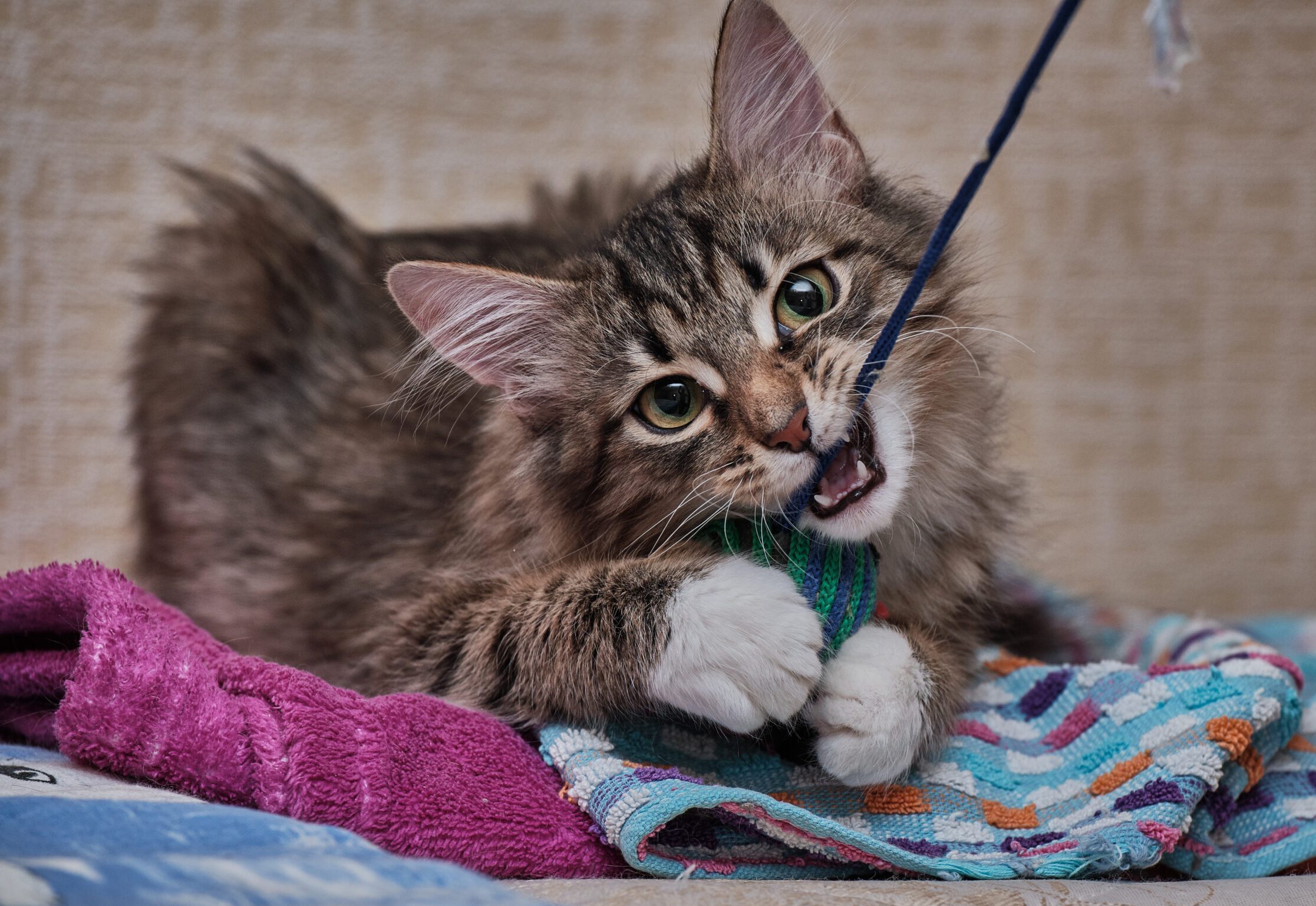
It’s a familiar, almost cartoon-like scene: a playful kitten batting at a ball of yarn. Harmless. Cute. Maybe even a little nostalgic. But when that playful swipe turns into a dangerous swallow, the consequences can be anything but charming. For cat owners, this everyday image hides a serious and often underestimated risk, one that can quickly transform common household items into medical emergencies.
This fascination with string isn’t just a quirky feline habit. Veterinarians routinely warn that items like hair ties, ribbons, and thread pose significant dangers when swallowed. The same instincts that make dangling strings irresistible are exactly what turn them into life-threatening hazards once ingested. Simply put, the risks of cats eating string are real, serious, and far more common than many pet parents realize.
To protect your pet, you must understand the instinct behind this behavior and the life-threatening damage it can cause. Knowing what to look for and what to do in an emergency is the key to turning anxiety into confident action. Answering the simple question of why cats chew on threadlike objects can guide safer choices.
It’s Not a Toy, It’s Prey: Unlocking Your Cat’s Hunter Instinct
To understand this strange obsession, you have to look past your fluffy housecat and see the tiny, hardwired hunter within. A dangling string, a wiggling hair tie, or a piece of dental floss doesn’t register as an inanimate object. To a cat, it is prey, plain and simple, and their brain is wired to respond accordingly.
The magic is in the movement. A string that wriggles across the floor or dangles in the air perfectly mimics the flick of a mouse’s tail or the slithering of a small snake. This visual trigger flips a powerful predatory instinct in your cat’s brain, launching an ancient sequence: stalk, pounce, capture, and — if they get the chance — consume. It’s a deeply satisfying impulse they find almost impossible to ignore. If you’ve wondered “why do cats like to eat string,” predatory drive is the clearest answer.
This powerful instinct is why scolding a cat for going after a shoelace is often useless. They aren’t misbehaving; they’re obeying a command baked into their DNA. Recognizing this behavior as an irresistible reflex, not a conscious choice, is the first step toward managing the danger. While instinct is the main culprit, sometimes other factors are at play. It also sheds light on why cats chew moving cords and laces.
Beyond the Hunt: Is Your Cat Chewing from Boredom, Stress, or Pica?
While the hunter instinct explains the initial pounce, it doesn’t always explain the dangerous next step: consumption. For some cats, the appeal isn’t just the chase, but the satisfying texture of the object itself. The fibrous texture of yarn or the rubbery snap of a hair tie can be incredibly rewarding to chew on, especially for kittens or cats who were weaned too early and retain a nursing impulse.
In some cases, this urge to eat non-food items points to a medical condition known as pica. Pica is a compulsion to eat non-food items that can be difficult for a cat to control. It’s the reason some cats will obsessively seek out and ingest specific materials, from soft wool blankets to crunchy plastic. Owners may ask, “Why do cats eat plastic and string?,” and often the same sensory feedback and pica are to blame.
So, can stress cause a cat to eat things? Absolutely. Pica can be triggered by several underlying issues, and a conversation with your vet is crucial to rule them out. Common causes include:
- Nutritional deficiencies in their diet
- Being separated from their mother too early
- Anxiety from a new pet, baby, or move
- Boredom and a lack of engaging toys
Ultimately, whether your cat is driven by instinct, anxiety, or a compulsion, the danger is the same. Once a string-like object is swallowed, it doesn’t matter why they ate it. This single act can set off a catastrophic chain reaction inside their delicate digestive system.
The “Drawstring Effect”: How a Simple Thread Becomes a Medical Emergency
You might assume that a swallowed object, even a piece of string, would simply pass through a cat’s digestive tract. Unfortunately, with long, thin items, the journey is far more treacherous. This creates a specific and life-threatening condition that veterinarians call a linear foreign body obstruction. It’s one of the most dangerous situations a cat can face.
The problem begins when one end of the string gets anchored, often wrapping around the base of the tongue or getting stuck in the stomach. A cat’s intestines are not a smooth tube; they work by rhythmically contracting to push contents along. But with the string fixed in place, the intestines can’t move it forward. Instead, they try to crawl up along the anchored string, gathering and bunching up tightly.
To visualize this, imagine pulling the cord on a drawstring bag. As you pull, the soft fabric cinches and pleats together. This is precisely what happens to your cat’s delicate intestines. This “drawstring effect” is catastrophic. The taut string can quickly saw through the intestinal wall, spilling digestive contents into the abdomen and causing a massive, often fatal, infection. These cat eating string risks illustrate the grave hazards of eating string for any feline.
Because of this severe internal damage, swallowing string is a true medical emergency that requires immediate veterinary intervention. The initial signs can be subtle, making it critical to recognize the red flags before the damage becomes irreversible.
Red Alert: 7 Symptoms of an Intestinal Blockage You Can’t Ignore
Since your cat can’t tell you what’s wrong, you have to be their detective. The signs of an intestinal blockage can be mistaken for a simple upset stomach, but the situation is far more serious. If you suspect your cat has swallowed string, a hair tie, or another thread-like object, watch for any of these red flags. The presence of even one or two is enough to warrant an immediate call to your veterinarian.
Keep a close eye out for these critical warning signs:
- Repeated vomiting, especially after trying to eat or drink.
- Complete loss of appetite or refusal to drink water.
- Extreme lethargy, weakness, or hiding in unusual places.
- A painful or bloated abdomen; your cat may cry out or resist being held.
- Straining in the litter box with little or no result.
- Diarrhea, as liquid stool can sometimes move around a partial blockage.
- A visible piece of string under the tongue or hanging from the anus.
A cat showing these symptoms is in distress and needs help right away. This is not a “wait and see” situation. If you see a string, under no circumstances should you pull it. Pulling can cause the very internal damage you’re trying to prevent. Knowing the signs is the first step, but your immediate actions are what matter most.
Your Cat Swallowed String: An Emergency Action Plan (And What NOT to Do)
Seeing a piece of string or a hair tie hanging from your cat’s mouth or rear is alarming. Your first impulse might be to grab it and pull it out. Whatever you do, DO NOT PULL THE STRING. This is the single most important rule, and resisting that urge could save your cat’s life. Any sign your cat swallowed something like string requires you to act, but pulling is the one action you must avoid.
That string might seem loose, but it could be anchored anywhere along the digestive tract. Pulling the string can cause the intestines to cinch up and bunch together, creating the dangerous “drawstring effect,” and potentially cutting off blood supply or even slicing through the intestinal wall.
Your first moves are simple but crucial. Gently move your cat to a secure room, like a bathroom, to prevent them from eating anything else. Once your cat is in a safe spot, call your veterinarian or an emergency animal hospital right away. They will tell you exactly what to do next.
Treatment for a linear foreign body often requires radiographic imaging and, in many cases, surgery to remove the object safely. This isn’t something that can be managed at home. By acting fast and following your vet’s advice, you give your cat the best possible chance. Ultimately, the best treatment is always prevention.
From Hazard to Haven: How to “String-Proof” Your Home
An ounce of prevention is worth a pound of cure, especially when it comes to your cat’s safety. The best way to stop a cat from eating inedible objects is to make them disappear. This process, called cat-proofing, involves scanning your home for potential hazards from a cat’s-eye view. Think like a curious feline: secure dangling blind cords, put away sewing kits, store shoelaces in a closet, and make sure kitchen twine and dental floss go straight into a sealed trash can. With cats and string, prevention is always better than rescue.
But removing temptation is only half the battle; you also need to provide safe outlets for that powerful hunting instinct. Instead of letting them play with dangerous items, offer vet-approved alternatives that satisfy their need to chase and chew. Here are some safe swaps you can make:
- Instead of yarn or string, use a sturdy wand toy with feathers for supervised play.
- Instead of hair ties or rubber bands, offer Mylar crinkle balls.
- Instead of loose ribbons, try a laser pointer for a fun chase, and always end with a physical treat to avoid frustration.
Finally, address the root cause of many destructive habits: boredom. This is where environmental enrichment comes in, a simple term for making your cat’s world more interesting. A cat tree for climbing, a window perch for bird-watching, or a food puzzle that makes them “hunt” for their kibble can work wonders. A stimulated cat is far less likely to go looking for trouble in the form of a stray rubber band.
A Proactive Owner is a Cat’s Best Defense
That classic image of a kitten with a ball of yarn probably looks different now. Where you once saw a cute game, you now recognize the powerful hunting instinct at play, and the life-threatening danger a simple string can become. This ability to see the risk behind the behavior is your most powerful tool for cat safety.
Your first step is simple: walk through your home and secure any loose strings, ribbons, or threads. This habit of prevention is the key. Remember, if you ever find your cat has ingested string, your only move is to call the vet immediately. Never, ever pull it.
This shift from worried owner to informed guardian is the core of responsible cat ownership. By understanding the “why,” recognizing the danger, and having a plan, you are actively preventing pet emergencies. You’ve traded anxiety for the peace of mind that comes from knowing how to keep your companion safe.
Meet the Doctor!
If you live in the Tucker, Georigia area visit Dr. Frank Romano, DVM and Owner of CityVet | Northlake, author of this blog. Book an appointment with Dr. Romano now!
Call or visit us at CityVet to book your appointment.