
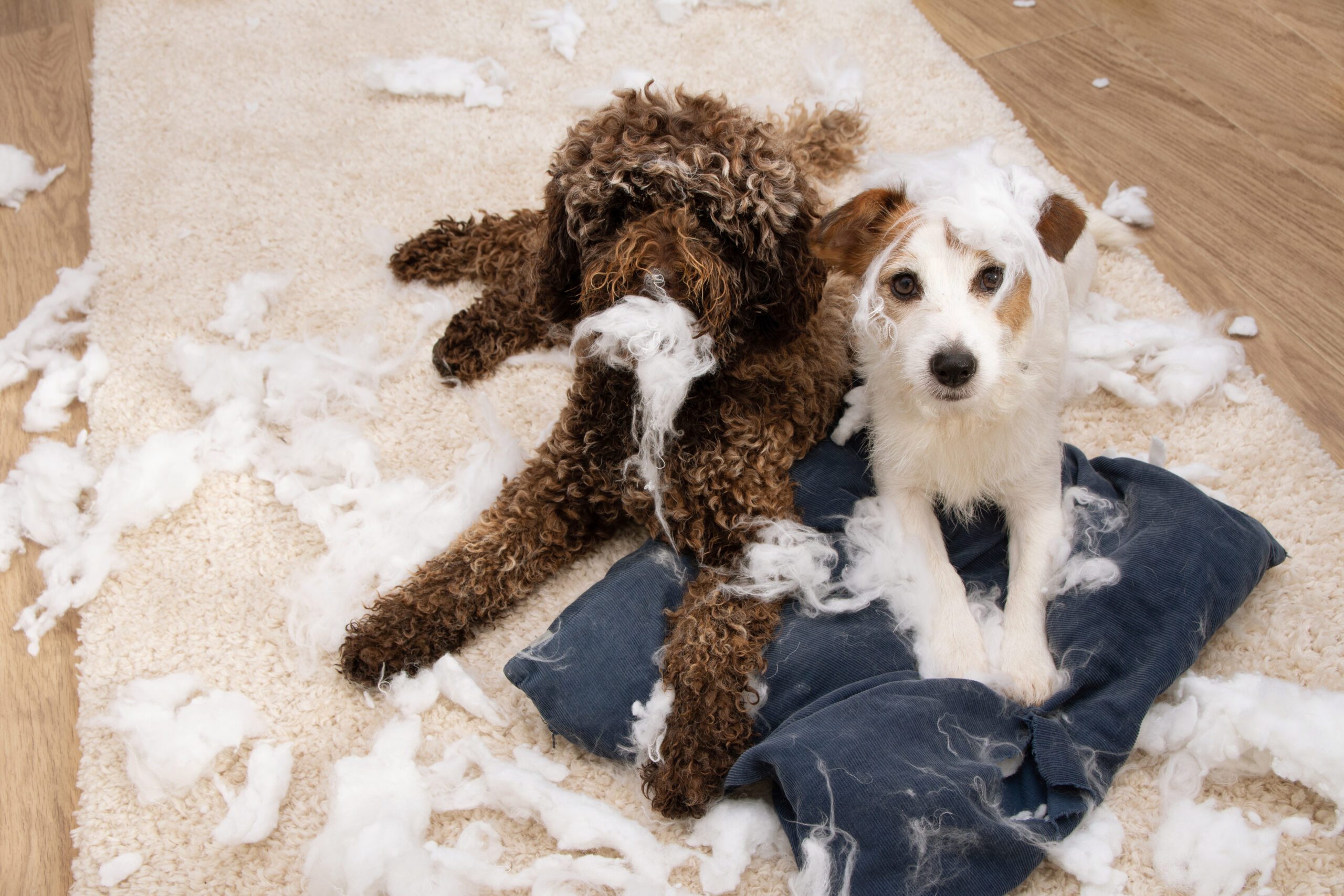
Why Is My Dog Destructive? Destructive Dog Behavior Explained
You love your dog, but you don’t love coming home to shredded cushions. If you’re feeling frustrated, confused, and even a little guilty, you’re not alone. The good news is that your dog isn’t being bad or getting revenge; they’re actually sending you a message. This kind of destructive dog behavior often signals a need within broader canine behavior problems.
Certified trainers agree that most destructive dog behavior stems from an unmet need. Instead of asking, “Why is my dog so destructive?,” the real question is, “What does my dog need?” This small shift in perspective is the first step toward a peaceful home and a happier companion, and it points you toward humane dog training for destructive behavior.
When a dog destroys everything, the cause usually falls into one of three categories: intense boredom (a need for activity), panic when left alone (a need for security, often seen as dog destructive behavior when left alone), or a natural instinct to chew or dig without a proper outlet. Identifying the driving need is the key to finding the right solution, especially if dog anxiety destructive behavior is part of the picture. This is true whether you’re seeing general dog destructive behavior or specific anxiety-driven damage.
Is Your Dog Just Bored? The #1 Reason for Chewing and Digging
If you can set a clock by when your dog starts getting into trouble — perhaps chewing the furniture every evening after a quiet afternoon — you’re likely dealing with simple boredom. This isn’t a sign of a “bad dog,” but a smart, energetic animal with an unmet need that responds well to dog training for destructive behavior and structured enrichment, plus practical dog chewing solutions.
Think of your dog’s daily energy as a budget that must be spent. Many dogs, especially younger ones or working breeds, have a massive energy budget. When that budget isn’t spent through positive activities like walks or play, the energy overflows into whatever is available. For a dog, shredding a sofa cushion or digging in the yard is a logical way to balance their energy account. They aren’t trying to destroy your things; they’re trying to find a job to do.
The simplest solution is often the most effective: a tired dog is a happy dog. Adding an extra 15-minute game of fetch can work wonders. But physical exercise is only half the equation, as a bored brain can be just as destructive as a restless body. Many dog training for destructive behavior guides emphasize this principle.
3 Simple Canine Enrichment Activities to Keep Your Dog Busy
The other half of the equation is mental exercise. Known as canine enrichment, this is about giving your dog a “job” that challenges their brain. Many trainers agree that 20 minutes of intense sniffing is as tiring as an hour-long run. It’s the difference between jogging on a treadmill versus solving a difficult puzzle. Both leave you feeling spent, albeit in different ways. These ideas also help reduce canine destructive behavior rooted in boredom and can ease mild anxiety.
Harnessing your dog’s powerful sense of smell is the easiest way to provide this mental workout. These activities tap into your dog’s natural instinct to forage, providing a healthy outlet for their busy mind. They can serve as gentle, at-home dog anxiety solutions for many pets.
Here are three “brain games” you can set up in less than five minutes:
- The Muffin Tin Game: Place a few pieces of your dog’s kibble in the cups of a muffin tin and cover each one with a tennis ball or another toy. Your dog must figure out how to remove the ball to get the reward.
- The Towel Burrito: Lay a towel flat and scatter some treats across it. Roll it up tightly, creating a “treat burrito” that your dog has to snuffle and unroll to find the food.
- Scatter Feeding: Ditch the food bowl for one meal. Instead, scatter your dog’s kibble across a section of your lawn (or a “snuffle mat” indoors) and let them hunt for their dinner.
Turning feeding time into a challenge satisfies your dog’s core need to work. But if increased exercise and brain games don’t stop the destruction, you may be dealing with more than boredom. At that point, formal dog chewing solutions like long-lasting chews or puzzle feeders can help, but consider whether anxiety is the driver and explore dog anxiety solutions with your vet or a trainer.
How to Tell if It’s Boredom or True Separation Anxiety
Even with more walks and brain games, some dogs still destroy things when left alone. If the pattern mainly shows up as destructive dog behavior when left alone, anxiety may be the culprit. This is where we ask, “Is my dog bored or anxious?” A bored dog is looking for self-employment, and chewing a shoe is just a way to pass the time. A dog with separation anxiety is experiencing a genuine panic attack. They aren’t having fun gnawing on your favorite sneaker; they’re terrified.
One of the biggest clues is the location of the destruction. A bored dog might randomly pull a book off a shelf. An anxious dog often focuses on escape routes. Look for deep scratches on doors and window frames or chewed-up blinds. These are classic signs of dog destructive behavior when left alone, as they desperately try to get to you.
This targeted destruction often accompanies other distress signals, like nonstop howling or having accidents in the house despite being housetrained. If these behaviors only happen when you’re gone, it’s a strong sign you’re dealing with more than simple boredom. Your dog isn’t acting out of spite; they are in a state of panic and need help to cope. Targeted support and dog anxiety solutions can make a big difference.
Your First Steps to Calm a Dog with Separation Anxiety
First, take a deep breath. Since you’re dealing with panic, not bad behavior, let go of any frustration. The goal is to patiently teach your dog that your departure isn’t a catastrophe and that being alone is safe. These are foundational dog anxiety solutions.
Start by making your leaving cues meaningless. Your dog has learned that jingling keys or putting on a coat signals impending doom. Several times a day, pick up your keys, walk to the door, then put them back down and sit on the couch. Put your jacket on, wander around the kitchen, then take it off. These “practice departures” teach your dog that old triggers no longer predict abandonment.
Next, introduce a special treat that only appears when you leave. A frozen Kong stuffed with peanut butter or wet food is a fantastic tool. It gives your dog a high-value “job” to do, creating a positive association with your departure. The goal is for your dog to think, “My human is leaving? Awesome, that means my favorite treat is coming!”
These small steps begin to rewire your dog’s brain, turning panic into calmer anticipation. While you work on this training, it’s crucial to manage their environment to set them up for success.
The 5-Minute “Dog-Proof Your Home” Drill
Training takes time. While you’re building your dog’s confidence, managing the environment is your most powerful tool. The goal is to make destructive choices impossible, which prevents the habit from becoming more ingrained. By removing the opportunity, you stop the cycle.
Before you leave, run through this quick dog-proofing guide:
- Kitchen: Securely close trash cans or place them in a pantry. Clear counters of any food.
- Living Room: Place remote controls, shoes, and toys in a closet. Tuck away or cover loose electrical cords.
- Bedroom/Office: Close closet doors and use hampers with lids to keep dirty laundry — a prime target due to your scent — out of reach.
Also, offer safe chew options as dog chewing solutions to redirect energy before you head out. Rotate out old toys for fresh, new items or offer a tasty chew that holds a high value for your pup.
For ultimate peace of mind, a crate can be your best friend. Instead of a jail, reframe it as your dog’s personal, destruction-proof bedroom. Making it a cozy den with a comfy bed and their special Kong treat transforms it into a safe space. Positive crate training gives them a secure spot to settle, guaranteeing a good outcome for both them and your sofa. As part of destructive dog training and management, this tool keeps your dog safe while you build skills.
Is It Just Puppy Teething? How to Survive the Chewing Phase
If your puppy is between three and six months old, you’re likely in the dreaded teething phase. This isn’t misbehavior; it’s a developmental need. Their gums are sore as adult teeth come in, and chewing provides relief. Teething-focused dog chewing solutions can make this stage easier.
Your job is to provide safe and soothing outlets. Simply saying “no” won’t work because the urge is overwhelming. Stock up on items designed to ease their discomfort. Veterinarians often recommend:
- Hard rubber toys that can be frozen (like a KONG puppy version)
- Edible puppy teething rings
- Whole, frozen carrots for a healthy cooling treat
When you catch your puppy chewing the wrong item, don’t scold. Calmly interrupt them and offer one of their special teething toys. The moment they switch their attention to the appropriate item, praise them enthusiastically. This simple act of redirection positively reinforces the right choice and builds good habits for life.
When to Call a Professional: 3 Signs You Shouldn’t Handle It Alone
That shredded cushion was all about communication. By trying enrichment, managing their environment, and building their confidence, you are already responding to your dog’s needs. But some messages require a translator. If you also see dog aggression issues alongside destruction, seek aggressive dog training help from a qualified professional. It’s time to call a certified professional if you see these signs:
- Escalating Destruction: You’ve implemented the strategies here, but the chewing, digging, or scratching is getting worse or more frantic.
- Risk of Injury: Your dog is breaking teeth, ingesting dangerous materials, or attempting to break through windows, doors, or a crate.
- No Progress with Separation Anxiety: Despite consistent training on departure cues and creating positive associations, your dog’s panic when left alone remains severe.
Don’t view calling for help as a failure. A certified dog behavior consultant or veterinary behaviorist can identify underlying medical conditions, create a more intensive behavior modification plan, and provide the expert support you and your dog deserve. By choosing to listen and respond, you are moving beyond damage control and building a partnership based on trust. You’ll be creating not just a peaceful home, but a bond that will last a lifetime. A professional can tailor a plan that addresses destructive dog behavior when left alone and anxiety-driven patterns in a sustainable way.
Understanding Your Dog’s Destruction
Destructive behavior can feel personal when it’s your favorite shoes or sofa taking the hit, but it’s rarely about defiance or spite. In most cases, your dog is doing the only thing they know how to do to express boredom, fear, discomfort, or confusion. When you pause long enough to ask why instead of how do I stop this, everything changes.
By meeting your dog’s needs through enrichment, structure, reassurance, and thoughtful management, you’re not only protecting your home, but also strengthening your relationship. And if the behavior runs deeper than you can handle alone, reaching out for professional support helps your dog in a meaningful way. With patience, empathy, and the right tools, destructive behavior becomes less of a battle and more of a conversation that leads to a calmer home and a happier, more secure dog!