

Comparing Urgent Care with Emergency Veterinary Care
Veterinary urgent care treats problems that need prompt attention but are not immediately life-threatening; emergency veterinary care handles potentially critical illness and injury. Urgent care typically costs less than emergency, and the right choice depends on your pet’s condition and the services available—not the exam fee alone. Understanding both options helps you make a safer decision and ask clearer questions about costs.
What is the difference between an ER and urgent care vet?
The main difference between an ER and urgent care vet is the level of care each provides. Urgent care focuses on immediate, non-emergency needs, while an emergency hospital can stabilize critically ill pets and provide more intensive treatment. Some urgent care patients need transfer to a hospital equipped for overnight monitoring or advanced care.
Think of urgent care as an option when your regular veterinarian cannot see your pet soon enough. An ear problem, itchy skin, or a minor wound may fit this setting after veterinary triage. Emergency care is appropriate when symptoms suggest an immediate threat to life or serious deterioration.
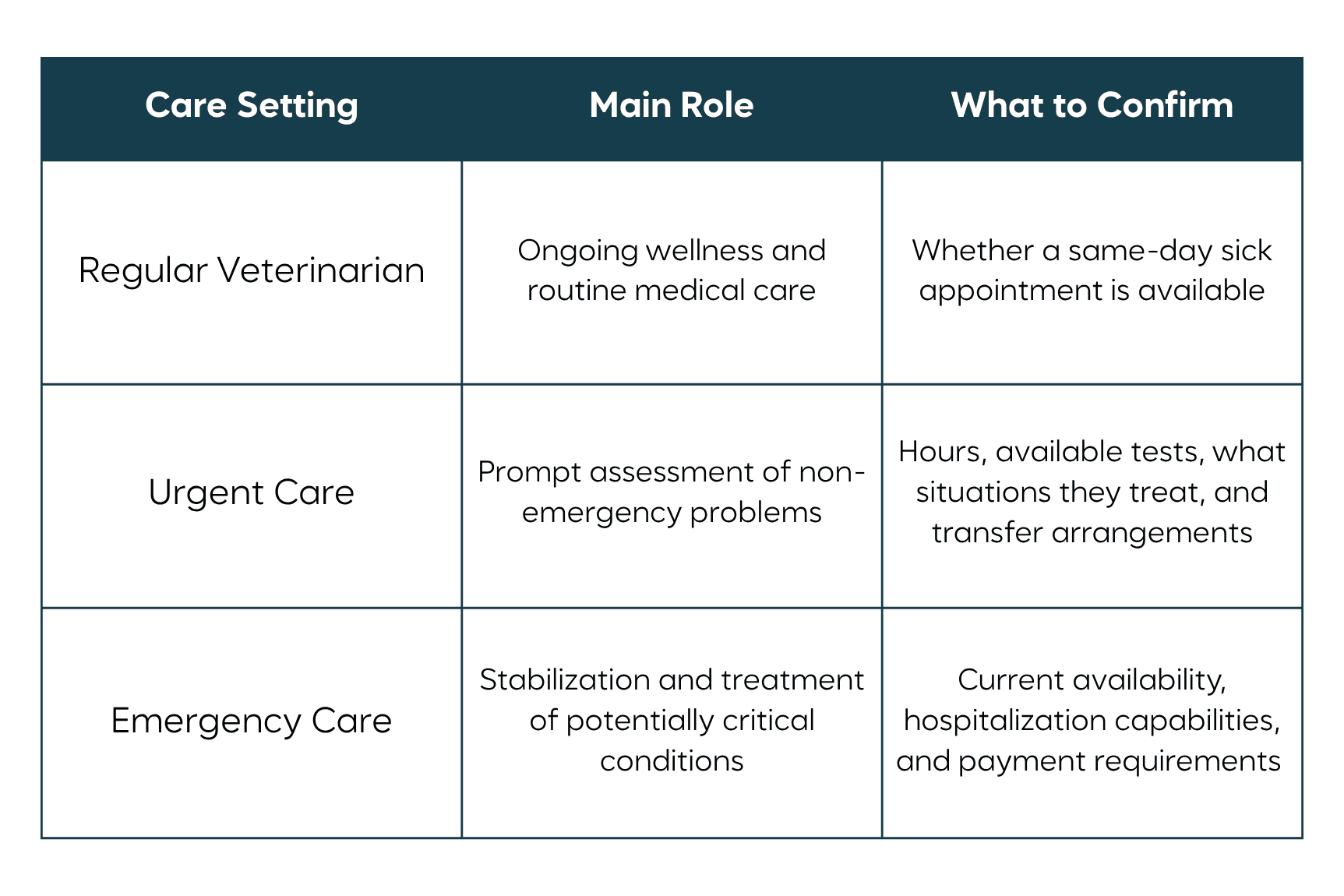
Services vary by location, so these labels are starting points rather than guarantees. Urgent care is described as extended-hours care for immediate non-emergency needs, while emergency services offers intensive monitoring, oxygen support, and other advanced treatments. Call the receiving clinic when possible to confirm it can meet your pet’s needs.
How much does urgent vet care cost compared with emergency care?
Urgent vet costs may be lower than emergency care, but there is no single reliable price for every visit. Separate the exam fee from the total treatment bill: the examination is only the starting point, and tests, medication, procedures, or hospitalization can increase the final amount substantially.
An emergency bill can reach several thousand dollars when treatment involves surgery or a hospital stay. That is why “how much is an emergency vet?” and “how much do emergency vets cost overall?” are different questions: one may refer to being examined, while the other includes everything needed afterward. Ask which services any quoted figure covers.
Is an urgent vet care expensive? It can still be a significant expense, especially if diagnostics or treatment are needed. If you are asking how much urgent vet care costs, request both the examination fee and an itemized estimate after the veterinarian assesses your pet. A lower entry fee does not establish the final bill.
Why are emergency vets more expensive?
Emergency vets are generally more expensive because they maintain the staff, equipment, and treatment capacity needed for unpredictable, serious cases. Night and weekend coverage, advanced diagnostics, surgery, and intensive care all contribute to that readiness. You are paying for access to those resources as well as the treatment your pet receives.
The total also depends on the care involved. A pet receiving an examination and medication has different needs from one requiring anesthesia, oxygen, repeated testing, and several days of hospitalization. Location, animal size, and the type of emergency can further affect charges.
Are pet hospitals more expensive than vets? The name alone is not a useful price comparison. Ask whether the facility provides primary care, urgent care, emergency services, or specialty treatment, then compare the proposed services.
Choose the care level before comparing prices
Urgent care may be cheaper than an ER vet for a suitable non-emergency problem, but it is not a substitute for emergency treatment if that is what the situation calls for. If you are unsure, describe the symptoms to a veterinary team and ask where to go. Do not delay potentially lifesaving care while calling multiple clinics for prices.
Seek emergency veterinary attention for warning signs such as:
- Difficulty breathing, collapse, or unresponsiveness.
- Major trauma or uncontrolled bleeding.
- Seizures or active tremors.
- Difficulty urinating or repeated attempts that produce no urine.
- A swollen, painful abdomen or repeated unsuccessful attempts to vomit.
- Suspected ingestion of medication or another toxic substance.
For suspected poisoning, contact a veterinarian, emergency hospital, or animal poison service immediately—even if you have not noticed symptoms. Follow their instructions rather than trying a home treatment. First aid does not replace veterinary care.
Urgent care may be appropriate for an ear infection, skin irritation, or a minor abrasion when the pet is otherwise stable, but the clinic should help determine suitability. Symptoms such as vomiting or limping can have different levels of urgency depending on severity and accompanying signs. Avoid choosing the setting from a symptom name alone.
Make the estimate conversation practical
You do not need to hide financial concerns. Tell the veterinary team early what you can afford and ask how that affects the recommended plan. Most veterinarians specifically encourage this discussion so its team can prioritize immediate needs and explain any available financing.
Use these questions to organize the conversation:
- What needs to happen immediately? Ask the veterinarian to explain the first priorities and whether stabilization is necessary.
- What does the estimate include? Clarify examinations, diagnostics, treatment, hospitalization, and any anticipated follow-up.
- Which options are medically reasonable? Ask whether any part of the plan can safely be staged or handled through your regular veterinarian.
- When will you contact me about changes? Agree on how the team will discuss additional recommendations and revised costs.
- What payment is required now? Confirm deposits, accepted payment methods, and financing arrangements.
The takeaway: match care to need, then clarify cost
Urgent care can be a cost-conscious option for a stable pet needing prompt attention, while emergency care provides resources for potentially critical situations. Let veterinary triage guide that choice, then ask for an itemized estimate and discuss payment early. Knowing your nearby options before something happens gives you a clearer starting point when your pet needs help.