
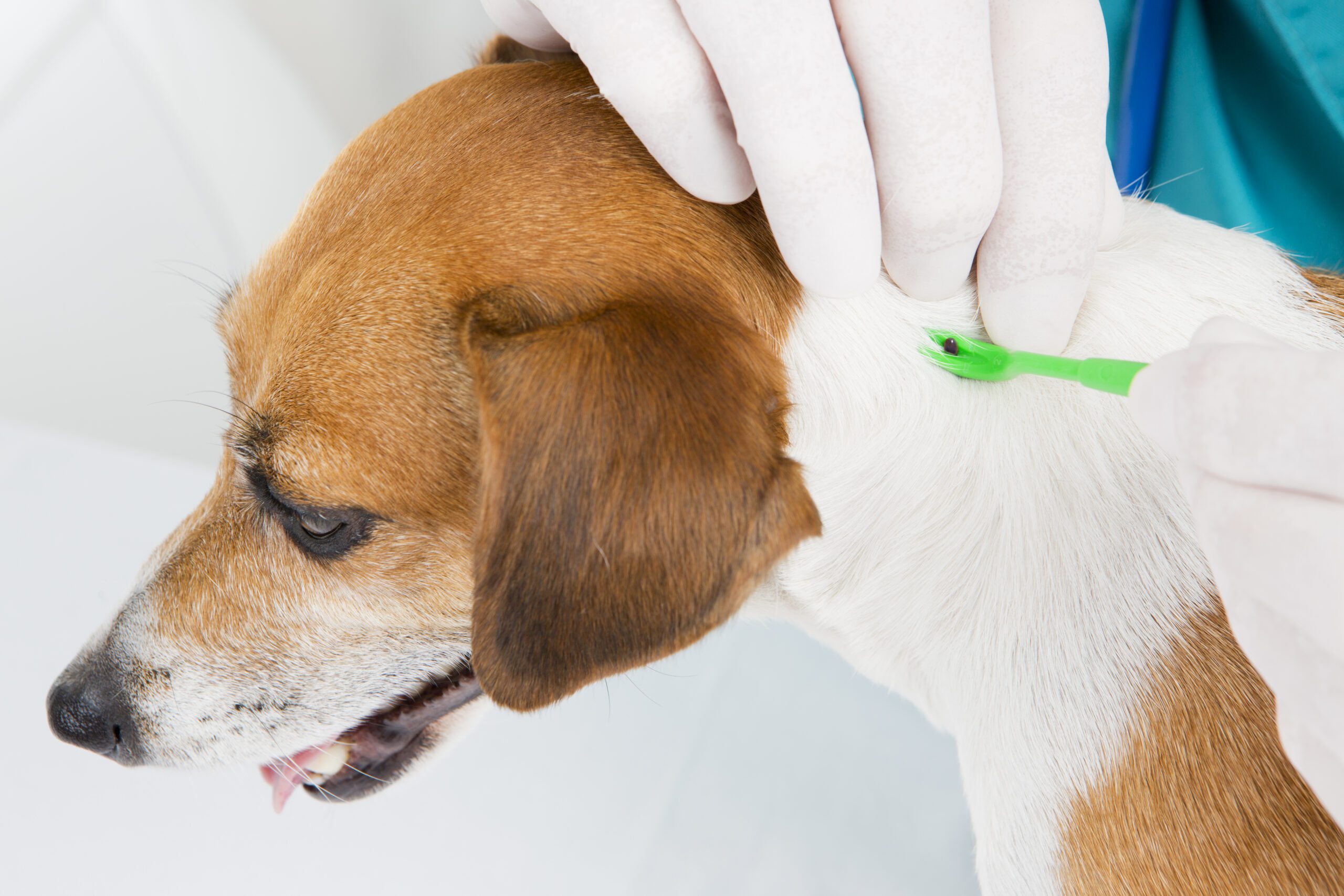
You just found a tick on your dog, and now the worry is setting in. Could it transmit Lyme disease? Before you panic, take a breath. The good news is that disease transmission isn’t instant. You have a critical window of opportunity to act, and understanding it is the key to keeping your best friend safe.
Think of an infected deer tick as a tiny, dirty needle; it takes time to inject its contents. Research shows the bacteria that cause the illness, Borrelia burgdorferi, typically need 24 to 48 hours of attachment to be transmitted. Unlike in humans, a “bullseye” tick bite on a dog is extremely rare, so don’t count on seeing one as a warning sign. Owners often miss ticks on their dogs as they are often hidden by their fur.
This is why knowing how to remove a tick correctly is your most powerful tool. Using fine-tipped tweezers, grasp the tick right by its head, as close to the skin as you can get. Pull upward with steady, even pressure; don’t twist or squeeze the tick’s body. A clean, swift removal is your best first line of defense.
What Does Lyme Disease Look Like in a Dog? 4 Key Signs
One of the trickiest parts of spotting Lyme disease is that symptoms often don’t appear for two to five months after an infected tick bite, which makes it hard to connect the two events. When the signs of Lyme disease in dogs finally do show up, they can be sudden and painful.
The most common symptom is what veterinarians call “shifting-leg lameness,” meaning the lameness can appear to move from one leg to another. Your dog might be limping on their front right leg one day, and a few days later, seem to be favoring their back left leg. This migrating joint pain is a classic red flag.
Beyond the moving lameness, there are other important symptoms of Lyme disease in dogs to watch for. If your dog is feeling the effects of the infection, you might notice:
- Obvious lameness, sometimes severe
- Fever
- Swollen, warm, or painful joints
- General lethargy or depression; not wanting to play or move
My Dog Has Symptoms: What to Expect at the Vet’s Office
If your dog is showing potential symptoms, your vet will start with a hands-on physical exam, checking the joints for pain and swelling. They will then recommend a simple blood test, which is highly accurate at looking for antibodies, the defenders your dog’s body creates after being exposed to the Lyme bacteria.
Many owners worry about a positive Lyme test, but this result simply confirms your dog has been exposed to the bacteria at some point. It does not automatically mean they have an active infection that is making them sick, as many dogs’ strong immune systems successfully reduce the bacterial invasion on their own.
Therefore, a diagnosis requires both a positive test and the clinical symptoms you observed. Treatment is only recommended when a dog has both, ensuring medicine is used only when truly necessary.
Can Lyme Disease in Dogs Be Cured? Treatment and Recovery
The good news is that active Lyme disease in dogs is very treatable. Once your vet confirms an infection is causing your dog’s symptoms, they will prescribe a course of antibiotics, most commonly doxycycline, for about 28 to 30 days. It is crucial to give your dog the entire prescription, even if they start feeling better early on, this will give them the best chance to rid the infection.
Many dogs show a dramatic reduction in symptoms like lameness and lethargy within just 48 to 72 hours of starting the medication. Seeing your dog get their energy back so fast is a clear and reassuring sign that the treatment is working.
However, the Lyme bacterium is tricky and often harbors within the kidneys in spite of treatment. While antibiotics can treat an active infection that is causing clinical signs, it is unlikely that the entire bacterial population will be eliminated. These lingering bacteria can cause future problems if the immune system comes under attack by another pathogen, thus becoming stressed, and can’t successfully prevent a Lyme flare-up.
Because of this unique trait of the Lyme bacterium, tick prevention is critical for keeping your dog safe from a potential lifelong illness. If your dog does become infected, close monitoring for future active infections is key to preventing serious problems.
Your 3-Step Plan for a Lyme-Free Dog
While treatment is effective, preventing the disease in the first place is the ultimate goal. Protecting your dog is straightforward when you follow a simple, three-part strategy:
- Use a vet-recommended tick preventative (like a collar, ) year-round.
- Perform daily tick checks, especially after your dog has been outside.
- Talk to your veterinarian about the Lyme vaccine, especially in area of endemic disease, the Lyme vaccine may be recommended annually.
Daily checks are your secret weapon. Since a tick must be attached for at least 24 hours to transmit Lyme, checking your dog and removing ticks quickly is one of the most effective things you can do. For an added layer of security, the Lyme vaccine can be a great option, particularly for dogs in high-risk areas. Your vet can help you weigh the pros and cons for your specific situation.
By making these steps a habit, you can stop worrying and get back to enjoying the great outdoors with your best friend.
Enjoying the Outdoors With Confidence
That little tick no longer holds the same power. Where there was once worry, you now have a clear plan: prevent, check, and watch. You are your dog’s most important health advocate. By turning this knowledge into simple daily habits and partnering with your vet, you can trade fear for confidence on every walk, hike, and adventure you share together.
Meet the Doctor!
If you live in the Chevy Chase, Maryland area visit Dr. Amir Nazari, DVM and Owner of CityVet | Chevy Chase, author of this blog. Book an appointment with Dr. Nazari now!
Call or visit us at CityVet to book your appointment.