
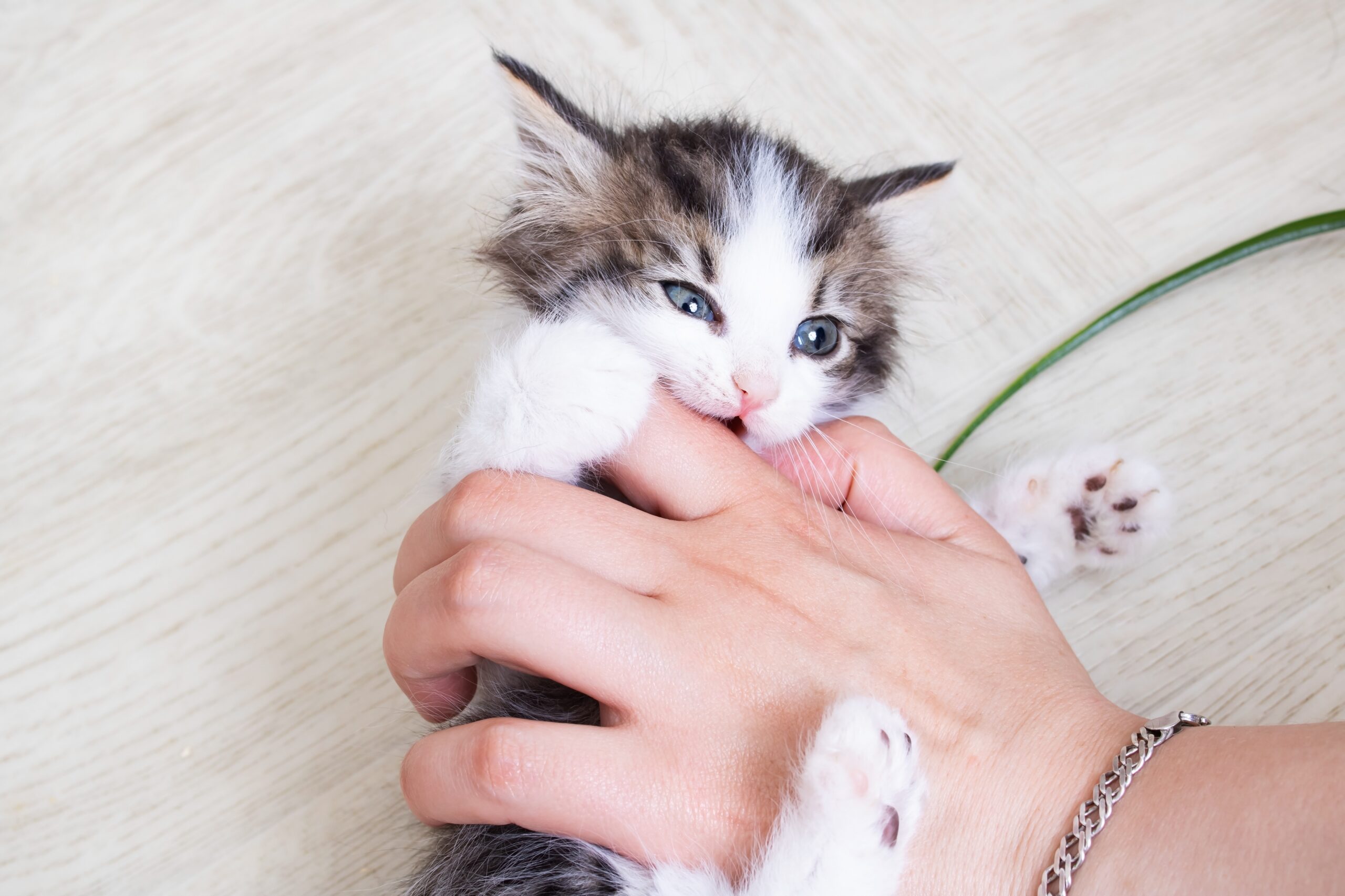
Kittens are adorable, but their biting can be challenging for new cat owners. If you’re wondering how to stop a kitten from biting, understanding why kittens bite is the first step.
Biting is a normal part of kitten development, particularly during play and exploration. Teething can also increase chewing behavior as kittens lose their baby teeth and their adult teeth come in. This behavior can be frustrating, but it’s important to address it early. The goal isn’t to stop your kitten from using its mouth altogether, but to teach what is appropriate to bite and how to play gently.
Teaching appropriate play requires patience and consistency. With the right approach, you can redirect biting towards toys, teach your kitten that biting people ends play, and reinforce more gently interactions.
This guide will provide effective, low-stress strategies to reduce unwanted biting and help your kitten develop appropriate play habits to create a harmonious relationship with your furry friend.
Understanding the Kitten Biting Stage
The “kitten biting stage” is not a single, precisely defined developmental period. Kittens begin practicing predatory play behaviors such as chasing, pouncing, biting, and clawing when they are around 6 weeks old and these behaviors can continue well beyond the first few months. Play is an important part of learning coordination, hunting skills, and appropriate social interactions. This phase is essential in their development, but it can be challenging.
Teething can be one contributing factor to increased chewing. Kittens generally begin replacing their baby teeth with permanent teeth at around 3-4 months of age, and most will have their full adult dentition by 6 to 7 months.
Some kittens bite frequently because they are excited or have learned that hands and feet are fun things to chase. Others may bite when overstimulated, frightened, frustrated, or in pain.
To manage this stage, consider the following tips:
- Provide appropriate toys for chasing, pouncing, batting, and chewing.
- Avoid using hands or feed as play objects.
- Keep play sessions engaging but stop before your kitten becomes overstimulated.
- Give your kitten safe opportunities to scratch, climb, explore, and rest.
- Reward calm, gentle interactions
Why Do Kittens Bite and Scratch?
Kittens bite and scratch for several reasons, and the reason matters when deciding how to respond.
- Play and predatory behavior: Chasing, biting, pouncing, and clawing are all normal parts of kitten play. Using interactive toys can provide an appropriate outlet for these behaviors.
- Teething: Teething can also drive chewing behavior, typically between 3.5 to 6 months of age.
- Overstimulation: When overexcited, kitten biting and scratching can escalate, so schedule short breaks during play. Rapid tail movement, ears moving backward, and dilated pupils can be signs that play is becoming too intense.
- Fear or stress: A frightened or overly stressed kitten may bite or scratch defensively rather than playfully.
- Pain or illness: A sudden change in behavior, particularly when biting is associated with being touched, could also indicate pain or another medical problem. If you do notice a sudden behavioral change like this, a veterinarian should perform a physical exam on your kitten to rule out pain or illness as a contributing cause.
Common Triggers for Kitten Biting
Understanding what happens right before a bite can help identify the cause.
Common biting triggers:
- Exciting or intense play
- Hands or feet being used as toys
- Teething discomfort and the urge to chew
- Boredom or lack of enrichment
- Frustration
- Stress, anxiety, or fear
- Being handled or petted beyond the kitten’s tolerance
- Pain or illness
If your kitten is biting everything, increase opportunities for structured play, exploration, scratching, and food-based enrichment. Rotate toys and engage in several short playing sessions throughout the day. Be careful with the types of toys that are being offered and ensure that the kitten isn’t able to ingest strings or small parts that could create an obstruction.
How to Stop Kitten from Biting: Step-by-Step Techniques
Stopping unwanted biting behavior requires patience and consistency. The most effective approach uses positive strategies and consistent training methods to prevent inappropriate biting, redirect your kitten to an appropriate activity, and reward the desirable behavior. These steps show how to get kittens to stop biting in everyday situations.
- Redirect biting to a toy
If your kitten goes for your hands or feet, calmly move the interaction toward an appropriate toy. It’s helpful to provide a variety of toys, with wand-style toys, small stuffed toys, and balls being particularly helpful to encourage chasing and pouncing to provide a better outlet for predatory play. Do not deliberately offer your fingers as something to chase or bite.
- Stop the Interaction When Biting Becomes Too Rough
If your kitten does start biting during play, calmly stop interacting and give the kitten a short break to allow them to settle down. Walking away can teach the kitten that biting causes human play time to end, and play can be resumed later when the kitten is calm.
- Reward Gentle Play
When your kitten plays appropriately, reward that behavior with continued play, treats, or attention. This helps to reinforce positive behaviors and teach the kittens desirable behaviors.
- Watch for Overstimulation
Don’t wait for your kitten to bite. Watch for the subtle signs that they are becoming overstimulated, like tail flicking, ears going backwards, and/or enlarged pupils. If you notice these signs, reduce the intensity or take a break from the play session before it escalates further.
- Keep it Consistent
Everyone in the household should follow the same rules when engaging with play. If one person allows hand biting during play while another discourages it, this can create mixed signals and confusion for the kitten.
Redirecting Biting and Scratching to Appropriate Outlets
Safe Toys and Outlets for Biting and Scratching
Kittens need to channel their natural instincts and energy effectively. Redirecting their biting and scratching to suitable outlets is vital.
Start by providing a range of toys that cater to different preferences. Choose toys that promote chewing, pouncing, and scratching, ensuring variety to maintain your kitten’s interest but maintain safety. Scratching posts can satisfy their urge to scratch, protecting household items in the process. Puzzle and food-dispensing toys can also provide great mental stimulation as well as an opportunity to work for food. There are some great climbing and perching areas available for cats now, like cat trees, shelves, and other elevated spaces can increase indoor cat enrichment in the home.
Observe your kitten’s play habits to identify their favorite activities. Encourage these behaviors by offering specific toys that align with their interests. This targeted approach can significantly reduce unwanted kitten biting and scratching.
Regular rotation of toys keeps playtime exciting, preventing boredom. Introduce new textures and shapes to engage your kitten’s curiosity. This keeps them entertained and less likely to focus their biting on you or your belongings.
Incorporating these strategies develops healthy play patterns. Your kitten will learn to engage in appropriate play, making household harmony achievable. Redirecting their energy promotes a safe and enjoyable environment for everyone involved.
Teaching Bite Inhibition and Gentle Play
Bite inhibition involves teaching kittens to control the strength of their bite. This skill is normally learned from their mother and littermates, but you can also encourage appropriate play at home.
When your kitten bites too hard during play:
- Stop the interaction calmly.
- Withdraw attention rather than wrestling with or physically correcting the kitten.
- Give the kitten time to settle.
- Resume later with an appropriate toy.
- Reward gentle play and appropriate interactions.
Patience is important in this process. Over time, your kitten will learn the difference between playful and harmful biting, creating a more harmonious environment for everyone.
By fostering gentle play and effective bite inhibition, you’re contributing to the development of a well-behaved adult cat. This enhances the bond between you and your furry friend, ensuring happy moments together.
What Not to Do: Mistakes to Avoid
When trying to curb kitten biting, avoid common missteps that can worsen the issue.
Don’t Use Physical Punishment
Physical punishment should never be used, as it can instill fear and lead to aggression. Instead of trying to “break” kittens from biting with punishment, rely on positive reinforcement to guide behavior. Do not hit, swat, scruff, shake, or otherwise physically punish a kitten for biting. Reward-based training is a superior approach.
Don’t Use Your Hands or Feet as Toys
Finger-wiggling, hand wrestling, and encouraging a kitten to chase for feet teaches a cat that human body parts are acceptable toys. This can persist into adulthood.
Don’t Continue Rough Play After a Bite
Continuing play can unintentionally reward the behavior. Calmly end the interaction and try again later.
Don’t Rely on a “No” Alone
A verbal correction can interrupt a behavior, but the kitten also needs to learn what it should do instead with redirection to an appropriate toy or activity.
Ensure your approach is calm and consistent, laying the groundwork for positive behavioral development in your kitten.
When to Seek Professional Help
If your kitten’s biting behavior continues despite consistent training, it may be time to consult a professional. Persisting problems could indicate underlying health or behavioral issues that need addressing, especially if your kitten bites too hard or attacks repeatedly.
A veterinarian or animal behaviorist can help identify and solve these challenges. They have the experience to offer tailored advice and strategies. Seeking expert guidance can ensure your kitten’s health and well-being while fostering a harmonious relationship with your furry friend.
Raising a Well-Behaved Kitten
Raising a well-behaved kitten requires patience and consistency. Understanding their natural behaviors is crucial to effective training. By providing engaging toys, consistent routines, and positive reinforcement, you can guide your kitten to better habits. Provide daily opportunities for play and exploration, offer a variety of toys instead of hands, watch for signs of overstimulation, and reward gentle interactions.
Remember, every kitten is unique. Tailor your approach to their individual needs and personality. With dedication and love, you’ll foster a strong bond and a peaceful household. A well-adjusted kitten grows into a loving companion, enriching your life for years.
Meet the Doctor!
If you live in the Keller, Texas area visit Dr. Kelsey Daugette, DVM and Owner of CityVet | Keller, author of this blog. Book an appointment with Dr. Daugette now!
Call or visit us at CityVet to book your appointment.