
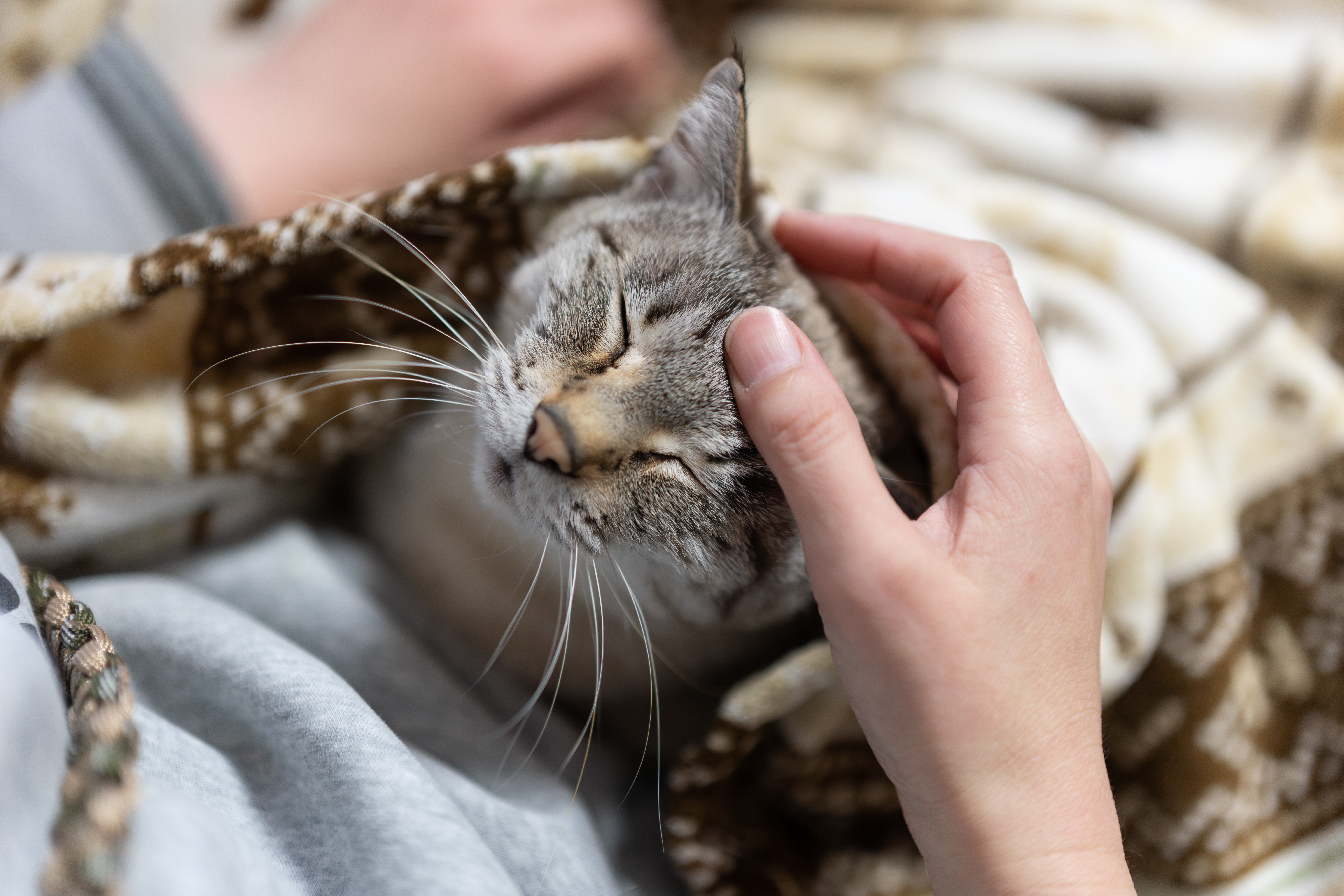
Understanding Feline Affection: How Cats Show Love
Happy Healthy Cat Month is the perfect time to learn more about how your cat shows affection. If you’ve ever wondered how cats express their love for their owners, the answer lies in everyday cat behavior: a slow blink, a head bump, a purr that turns on the moment you sit down. This guide is a practical cat body language guide to help you recognize the signs of feline affection, cat cuddling preferences, and create happy, healthy cats through trust building and stress reduction.
What feline affection looks like (and why it’s different than canines)
People often compare cat vs dog affection. Dogs tend to be outwardly enthusiastic; cats are more selective, using quiet signals and “consent-based” contact. That doesn’t mean they’re less loving, just different.
Do cats bond with owners?
Absolutely. Many cats form strong attachments and show it through proximity, routines, scent sharing, and social grooming. Understanding those signals helps you recognize the real signs your cat loves you.
The clearest signs your cat loves you
Below are common feline signs of affection and what they usually mean.
Slow blink = “I trust you”
Here is the core idea: a slow, relaxed blink is a friendly signal. Try slow blinking back and turning your face slightly away afterward (a polite “I’m safe” cue in feline language). Over time, this becomes a simple ritual of kitty love.
Headbutts and cheek rubs = bonding + scent sharing
Wondering what cat headbutting means? Cats have scent glands on the head and cheeks. When they “bunt” you, they’re mixing scents, basically tagging you as family.
You’ll also see:
- Cat rubbing against legs, a mix of greeting, scent marking, and sometimes a request for food, play, or attention.
- Gentle face-rubbing on your hand before petting: your cat’s way of “introducing” you to their scent profile.
Purring: Comfort, connection, and sometimes self-soothing
People ask why cats purr at humans, because it feels like a love language and often it is. Many cats purr when content, social, and relaxed, especially during calm petting or lap time. But purring can also be self-soothing when a cat is anxious or not feeling well.
Look at the full cat behavior context:
- Relaxed body, soft eyes, and kneading is likely paired with a happy purr.
- Tense posture, hiding, and a reduced appetite may be attributed to stress or illness and comes with a self-soothing purr.
Cat snuggles, on their terms
Cat snuggles can look like lap sitting, leaning, sleeping near your head, or choosing the same room. Some cats prefer “side-by-side affection” over full-on cuddles. Respecting cat cuddling preferences is one of the fastest ways to build trust with loving cats (and to prevent overstimulation).
Common cuddling styles:
- “Near you” cat: sleeps beside you, not on you
- “Contact” cat: lap sitter, shoulder cat, or chest napper
- “Drive-by” cat: quick rubs, short cuddles, then off to patrol
How cats show affection through body language
Use this quick cat body language guide to tell “yes” signals from “not now.”
Comfortable and affectionate:
- Tail held upright with a soft curve at the tip
- Ears neutral/forward
- Soft, half-closed eyes
- Rolling onto side (not always a belly-rub request!)
- Gentle kneading, grooming you, or “checking in” with chirps
Overstimulated or stressed:
- Tail flicking or thumping
- Skin twitching along the back
- Ears flattening or swiveling sharply
- Sudden stop-and-go petting tolerance
- Moving away, turning head, or giving a quick nip
How to pet a cat correctly
Many people miss affection because petting becomes overstimulating. Here’s how to pet a cat correctly:
- Start with the “safe zones”: Cheeks, under the chin, base of ears
- Use slow strokes; pause every few seconds to let your cat choose more
- Avoid the belly unless your cat clearly loves it
- Watch for tail flicks, tense shoulders, or skin twitching
A simple consent test:
- Stop petting and hold your hand still.
- If your cat leans back in, rubs you, or repositions for more, continue.
- If they pause or move away, respect the “no.”
Play is affection, too
Interactive play (wand toys, fetch for some cats, puzzle toys) mimics hunting and builds confidence. For many cats, play is a major channel of cat affection, sometimes more than cuddling.
Bonding through routine
Reliable routines (meals, play, quiet time) help cats feel safe. Safety is the foundation of how cats show affection consistently.
When affection turns into anxiety: Separation and stress
Some bonded cats can develop distress when left alone. If you’re searching for cat separation anxiety solutions, start with environment and predictability.
Reducing cat stress at home
These steps support happy healthy cats and more relaxed affection:
- Add vertical spaces (cat tree, shelves) and safe hiding spots
- Provide scratching posts in multiple areas
- Use puzzle feeders to reduce boredom
- Schedule two short play sessions daily
- Keep litter boxes clean and in low-traffic spots
- Consider pheromone diffusers for multi-cat or high-stress homes
If your cat vocalizes excessively when you leave, poops or pees outside the litter box, or over-grooms, consult a veterinarian or a qualified behavior professional, especially to rule out medical causes.
A quick checklist: Signs your cat loves you
If you want a simple read on signs your cat loves you, look for:
- Slow blinks and relaxed eyes
- Headbutts, cheek rubs, or gentle nuzzling
- Following you room to room or “supervising”
- Choosing to nap near you (even without touching)
- Grooming you or kneading near you
- Purring during calm contact (with relaxed posture)
These are classic feline affection signals and a big part of what makes happy healthy cat month a great reminder to notice the small moments of connection.
Communicating through the feline love language
To understand how cats show affection, think in terms of trust, choice, and subtle signals. Learn your cat’s body language, honor their boundaries, and focus on calm routines, play, and gentle touch. The result is deeper bonding, less stress, and more consistent cat love, the kind that grows quietly into a lifetime of love and happy, healthy cats.