
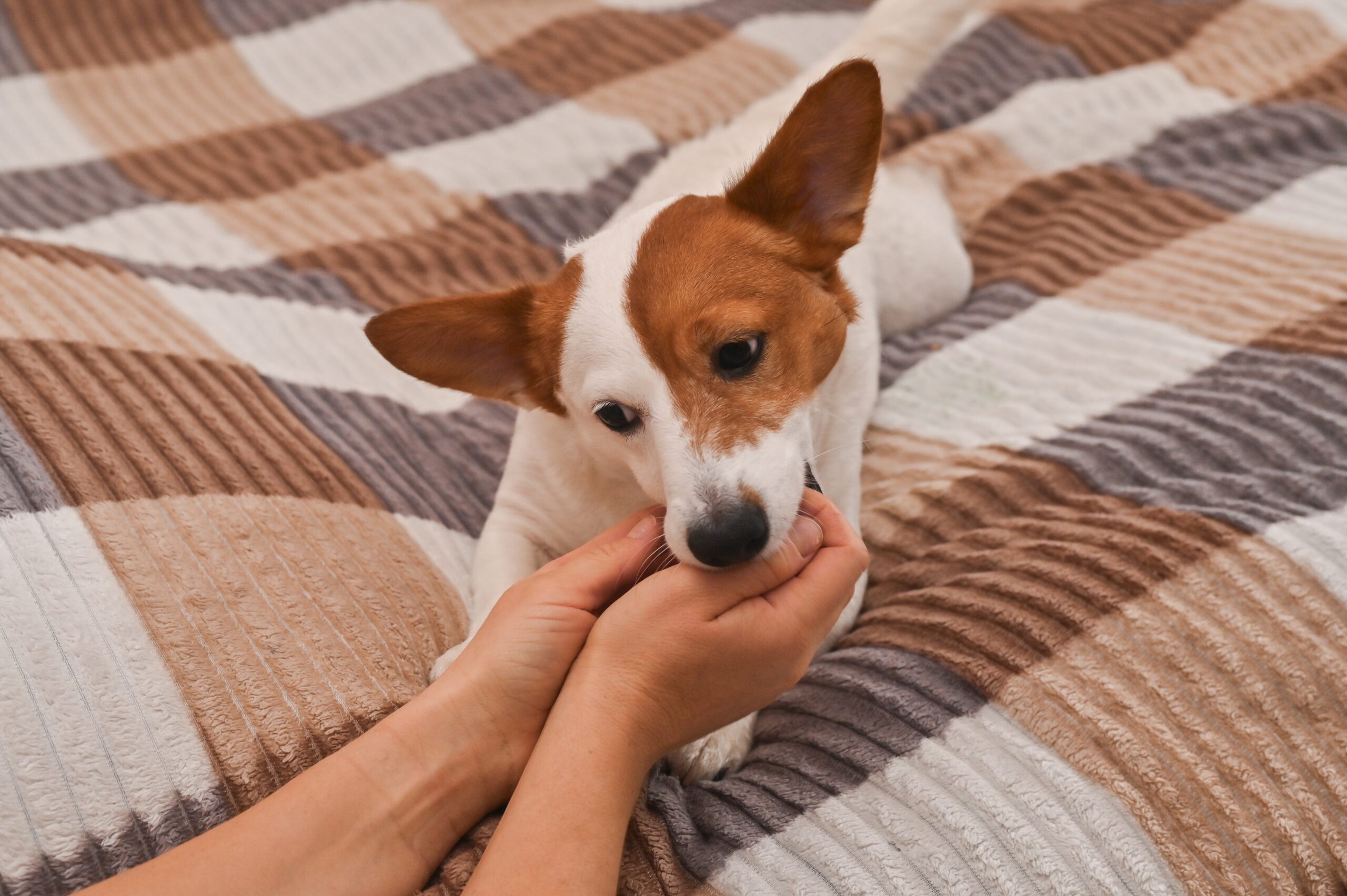
If you’re a dog owner, you’ve probably felt it: a gentle, ticklish pressure from your dog’s front teeth, almost like they’re “corn cobbing” on your arm. It’s a strange feeling that doesn’t hurt, but it definitely makes you wonder what’s going on. Many owners find themselves asking, “why does my dog nibble on me,” or simply trying to understand why dogs nibble at all. The good news is this behavior is perfectly normal and, according to most animal behaviorists, is rarely a sign of aggression.
Among dog communication methods, this gentle biting is one way dogs communicate, often learned in puppyhood when they would groom and play with their littermates. Instead of being random, it’s a specific action your dog uses to express a feeling or a need, whether that’s affection, excitement, or a desire for attention. It’s their way of “talking” with their mouth.
By understanding what your dog is trying to say, you can strengthen your bond and decode whether that nibbling is an “I love you,” a call for playtime, or simply a habit you need to gently redirect, including the moments when you wonder, “why does my dog want to nibble on me.”
Is Your Dog’s Nibbling a Sign of Affection?
When your dog gently nibbles your skin with their front teeth — a behavior sometimes called “flea biting” or “corn cobbing” — it is very often a sign of affection. If your dog is relaxed and offers these little nibbles while you’re calmly petting them, they aren’t being aggressive. On the contrary, they’re communicating a deep sense of contentment and closeness, showing you they feel safe and happy by your side.
This behavior is deeply rooted in an instinct called social grooming. In the canine world, dogs groom each other to strengthen social bonds, show care, and maintain pack harmony. Think of it as your dog’s way of saying, “You’re one of my most important people, and I’m taking care of you.” It’s the same tender care a mother dog shows her puppies, repurposed for their favorite human. When your dog nibbles you when petted, they are treating you like trusted family.
Ultimately, these gentle nips are a profound sign of trust. Your dog feels so comfortable with you that they are performing an intimate bonding ritual. It’s one of the most subtle and meaningful compliments a dog can give. Of course, this quiet, affectionate nibbling is different from the more energetic mouthing that can happen during play.
Why Excitement Makes Your Dog Mouth Your Hand
While gentle nibbling is a sign of calm affection, excitement can bring out a completely different, more energetic behavior: mouthing. This helps answer questions like “why does my dog nibble on me when we play” or “why does my dog nibble on me when excited.” If your dog starts grabbing your hand with their mouth during a game of fetch or when you walk in the door, they aren’t being aggressive. This is their instinctual way of saying, “Play with me!” It’s a classic invitation to engage, rooted in how canines interact with one another from a young age.
Think about how dogs play together — it’s a whirlwind of wrestling, chasing, and yes, using their mouths. Since they don’t have hands to grab and tag each other, they use what they have. A playful mouth on your hand is fundamentally different from a real bite; the pressure is controlled, and their body language is usually loose and wiggly, not tense or stiff. They are simply trying to include you in their fun, not hurt you.
This behavior is your dog inviting you to play in the most natural way they know how. It’s a normal, if sometimes inconvenient, part of their communication toolkit. This is especially true for young pups, who have another major reason for putting everything in their mouths: soothing their sore gums.
Puppy Nibbling vs. Adult Mouthing: Soothing Teething Pains
For those of you with a young puppy, that constant mouthing has an even more specific and pressing cause: teething. If it feels like you keep asking “why does my dog always nibble on me,” teething may be the reason. If your pup is under seven months old and seems to be chewing on everything in sight, especially your fingers, you’re almost certainly dealing with this totally normal developmental stage. It’s a phase driven by discomfort, not bad behavior.
Just like human babies, puppies lose their baby teeth to make way for a permanent adult set. This process can be uncomfortable, and the pressure from chewing helps relieve their sore gums. Puppies much like humans use their mouths to explore new things in the world.Your hand, being soft yet sturdy, simply feels good to gnaw on. Your puppy isn’t trying to hurt you; they are instinctively seeking relief from a nagging ache.
This is why a teething puppy’s nibbling can feel so relentless. While an adult dog might mouth you during a moment of excitement, a puppy might seem to be on a mission to put their mouth on you constantly. Remember, they aren’t being naughty — they are just trying to feel better in the only way they know how.
The good news is that this intense chewing phase is temporary and usually subsides once their adult teeth are fully in. However, this period is also a crucial window for your puppy to learn a vital skill for life.
The Most Important Skill Your Dog Is Learning: Bite Inhibition
This teething period is a crucial window for your puppy to develop a skill called bite inhibition, which is a fancy term for learning to control their jaw pressure. It’s one of the most important lessons a dog ever learns, ensuring they can play safely with both dogs and people for their entire life.
This lesson starts in the puppy pile. When a group of puppies tumbles around, they use their mouths constantly. If one puppy bites a sibling too hard, the victim will yelp loudly and immediately stop playing. This sudden end to the fun is a powerful signal. The biter quickly learns: “If I want the game to continue, I have to be more gentle.”
When your dog nibbles on you, they are often continuing this education. They are exploring the boundaries with their most important family member: you. By feeling for your reaction, they are fine-tuning their understanding of what pressure is acceptable. Far from being a sign of aggression, it’s often a cooperative effort to figure out the rules of safe interaction in their human pack.
So, in many cases, this gentle nibbling is a sign of a well-socialized dog practicing a critical skill. However, it’s equally important to distinguish this harmless practice from behavior that signals stress or potential problems.
Gentle Nibbling vs. Problem Biting: 3 Red Flags to Watch For
While that gentle “corn-cobbing” is usually harmless, it’s important to know when friendly mouthing crosses the line into a warning. A relaxed, wiggly dog who is nibbling gently is communicating affection or a desire to play. In contrast, a dog exhibiting stress or fear will communicate very differently.
The key is to look at the whole picture, not just the mouth. When distinguishing between safe dog mouthing and a potential problem, watch for these clear warning signs:
Stiff Body & Hard Stare: A playful dog is loose and wiggly. A stressed dog will often freeze, become rigid, and stare intently. This is a sign to give them space.
Vocal Warnings: Playful noises are often high-pitched and light. A low, rumbling growl or a snarl where the dog lifts their lip to show teeth is a clear signal that they are uncomfortable and want you to stop.
Painful Pressure: Play nibbling shouldn’t hurt. If the pressure increases to the point where it’s painful, causes a bruise, or breaks the skin, it is no longer playful.
A growl, in particular, isn’t a sign of a “bad dog.” Instead, it’s a clear communication signal. Your dog is using their words to say, “I’m not comfortable with this.” Respecting that warning is crucial for building trust and preventing a situation from escalating. But what if the behavior isn’t aggressive, just annoying or happening too often? Fortunately, you can teach better habits.
How to Stop Unwanted Nibbling: The Power of Redirection
If the nibbling is more of a nuisance than a threat, the most effective way to stop your dog from mouthing is a technique called redirection. The concept is simple: the moment you feel their teeth on your skin, you immediately replace your hand or arm with an appropriate toy. This isn’t a punishment; it’s a trade. You’re taking something they want (your hand) and offering something even better, like a fun, chewable toy.
This simple swap is incredibly powerful because it teaches your dog what you want them to do, rather than just scolding them for a natural instinct. Just saying “No!” might confuse them, as it doesn’t offer a solution for their urge to chew. By consistently providing a better option, you’re using positive reinforcement to guide their behavior. It becomes a win-win game that shows them, “Chewing is great, but let’s chew on this instead of on me.”
To make redirection work, choose the right tools. The best toys for dogs that mouth are often durable rubber items or sturdy rope toys that satisfy their need to chew and feel interesting in their mouth. Keep one of these toys handy wherever you and your dog spend time together, so you’re always prepared to make that quick, positive trade and build better habits.
Build a Stronger Bond: Your 3-Step Plan for Healthy Play
That strange, ticklish nibble on your hand is no longer a mystery. You can now see it for what it often is: a form of communication rooted in affection, play, or exploration. This insight is your starting point for building an even better understanding with your dog.
To turn this knowledge into confident action, just remember this simple plan:
Understand the “Why”: Is this a moment of affection, an invitation to play, or puppy teething?
Redirect Gently: Always have a toy ready to swap for your hand.
Teach a Soft Mouth: Use a quick “Ouch!” to signal when pressure becomes too hard.
By seeing this behavior as a conversation, you transform it from a nuisance into an opportunity. Every gentle nibble is a chance to listen, guide, and strengthen the incredible bond you share with your best friend.
Making Sense of Your Dog’s Mouthy Moments
In most cases, when your dog nibbles on you, they aren’t misbehaving, but communicating. Whether it’s a sign of affection, excitement, teething, or learned social behavior, the meaning lies in the context and your dog’s body language. Understanding the “why” behind the nibble allows you to respond appropriately, reinforce healthy boundaries, and guide the behavior without damaging trust. With a little awareness and consistent redirection, this common habit becomes easy to manage, and far less mysterious.
Meet the Doctor!
If you live in the Surprise, Arizona area visit Dr. Jonathan Bycroft, DVM and Owner of CityVet | Surprise, author of this blog. Book an appointment with Dr. Bycroft now!
Call or visit us at CityVet to book your appointment.