
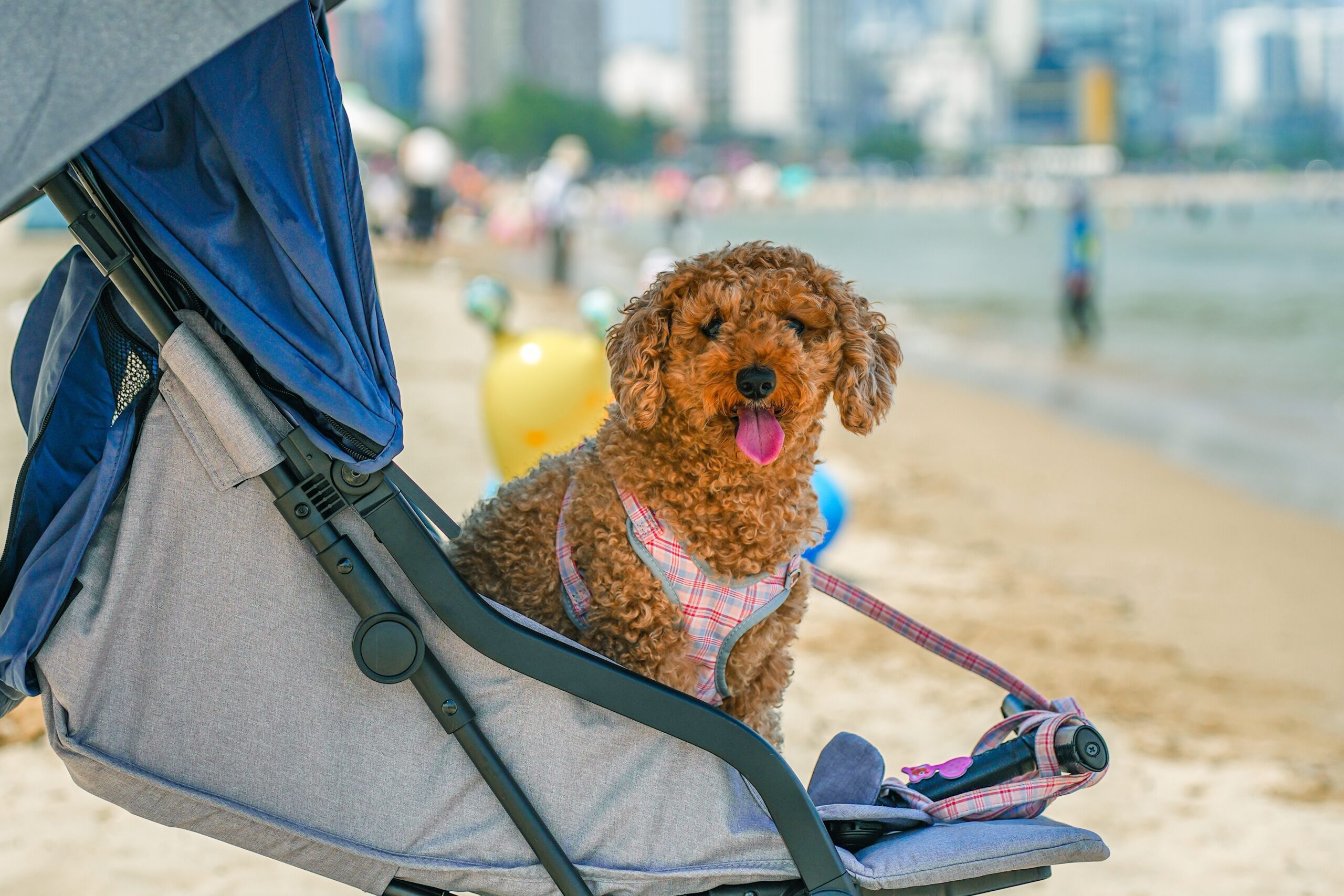
It’s a beautiful, sunny afternoon, and your dog is giving you that look you know all too well, while they’re holding a leash and furiously wagging their tail. Before you grab it and go there’s a critical fact to consider: how hot is too hot for dogs, and is it too hot to walk my dog right now?
That pleasant 80°F (27°C) day can heat asphalt to a paw-searing 125°F (52°C). Since dogs cool down by panting instead of sweating, they are far more vulnerable to overheating. The difference between air temperature and ground temperature is a hidden danger many owners don’t realize until it’s too late, especially when walking dogs in hot weather or planning on walking dogs in summer.
Wearing a Fur Coat in a Sauna
To understand why high temperatures and dogs are such a risky combination, picture yourself wearing a winter coat on a summer day. That’s your dog’s reality. While we have sweat glands all over our bodies to release heat, dogs primarily have them in their paw pads. Their main cooling system is panting, which works by evaporating moisture from their tongue and lungs.
The problem gets much worse when you add humidity. The higher the moisture in the air, the less effective panting becomes. For your dog, a hot, humid day feels like being wrapped in that fur coat inside a sauna, there’s simply nowhere for the heat to go. The humidity effects on dogs can turn a warm day into a dangerous one very quickly. Due to their natural cooling system being so easily overwhelmed, dogs rely on us to know when it’s safe to be active.
The Simple Temperature Rules: When Is it Officially Too Hot?
Knowing your dog struggles to cool down is one thing, but how do you translate that into a clear decision before a walk? Many veterinarians use 80°F (27°C) as a key temperature for caution. Once the thermometer hits this mark, the risk of heatstroke for dogs increases significantly, especially during midday hours when the sun is most intense. At this point, it’s time to rethink the length and timing of any outdoor exercise. In general, the safest time for dogs to exercise comfortably is cooler, early mornings and late evenings.
The air temperature, however, doesn’t tell the whole story. Pavement and asphalt act like a skillet, absorbing and radiating heat. On an 85°F (29°C) day, the surface of the asphalt can easily reach a scorching 140°F (60°C). This can cause painful and serious burns to your dog’s paw pads in a matter of minutes.
To check for this hidden danger, use the simple Five-Second Rule. Place the back of your hand on the pavement and try to hold it there for five seconds. If it’s too hot for your hand, it is definitely too hot for your dog’s paws.
Using the air temperature and the Five-Second Rule together gives you a powerful way to protect your pet. Remember, these guidelines are a starting point. While they apply to all dogs, certain breeds, ages, and health conditions create even greater risks. When in doubt about the safe temperature for walking dogs, shorten the outing or skip it.
Quick Dog Walk Temperature Guide
Use this as a general reference for temperature for dogs outside. Individual risk varies with breed, age, humidity, sun, and activity level.
- Below 68°F (20°C): Safe for most healthy dogs. This is a safe temperature for walking dogs, provided they do not have any health conditions that make exercise difficult.
- 68–75°F (20–24°C): Generally safe, but watch the sun and humidity. Take breaks and provide water.
- 75–82°F (24–28°C): Caution zone. Shorten walks, avoid midday heat, and prioritize shade. For many pets, this edges toward temperatures too hot for dogs to be outside.
- 82–90°F (28–32°C): High risk for overheating, especially on sunny pavement. For many, this is too hot to walk a dog.
- 90°F+ (32°C+): Dangerous temperature for dogs, avoid outdoor exercise, and avoid dark, overheated pavement.
As a rule of thumb, extended time outdoors is safest well below 75°F (24°C), with shade and water available. Above that, limit duration, monitor closely, and use the pavement test. When heat and humidity spike, choose the best time to walk your dog in summer, either at dawn or dusk.
Which Dogs Are Most At Risk? Why Breed, Age, and Health Matter
While the 80°F (27°C) guideline is a great start, it doesn’t apply equally to all dogs. Certain physical traits and health factors can turn a warm day into a dangerous one for specific dogs, even when others seem fine. Knowing your dog’s individual risk level is key to making the safest choices.
Some dogs are naturally far more vulnerable to heat intolerance. Pay close attention if your dog is one of these:
- Short-nosed (brachycephalic) breeds like Pugs, French Bulldogs, and Boxers, whose compact airways impair cooling
- Senior dogs and very young puppies, as their bodies struggle to regulate temperature effectively
- Overweight or obese dogs, since excess fat acts as insulation and traps heat
- Dogs with thick, dark-colored coats that absorb more sunlight
- Dogs with existing medical conditions, especially heart or lung disease
Conversely, some breeds handle warmth better, but no dog is immune to extreme conditions. For higher-risk dogs, your safety threshold is much lower, and a warm day can quickly become an emergency.
How to Read the Warning Signs: From ‘Just Hot’ to a Medical Emergency
It can be tough to tell the difference between a happy, tired dog and one in early distress. The key is to look for a change from normal panting to frantic, heavy breathing accompanied by thick, ropey drool. This is the first signal of heat exhaustion, where your dog’s body is starting to lose the battle against the heat. Their tongue may also appear wider and a darker, more alarming shade of red than usual.
If not addressed, this can quickly become life-threatening heatstroke. The symptoms of a dog’s heat stroke are severe and cannot be ignored: your dog may become dizzy, stumble, or seem confused. Other critical signs that signal an emergency include vomiting, diarrhea, and pale or bluish gums. At this stage, your dog is in a state of crisis and needs immediate intervention. A simple visual dog heatstroke chart can help you recognize the escalating signs quickly.
Along with these signals, you can quickly check for signs of dog dehydration. Gently touch your dog’s gums. If they feel sticky or dry instead of wet and slick, your dog is losing essential fluids. Recognizing that a dog is too hot is the first critical step, and knowing exactly what to do next can save their life.
Emergency First Aid: What to Do Immediately If Your Dog Overheats
If you suspect heatstroke, immediate action is your dog’s best chance. The first thing to do for dog heatstroke is to move them out of the sun and into a cool, shaded area or an air-conditioned room. Don’t wait. Every second counts as their internal temperature continues to rise, even after being removed from the heat source.
Knowing how to cool down an overheated dog the right way is critical. Use cool, not ice-cold, water. Douse their head, neck, chest, and groin with lukewarm — never cold — water, or let them stand in slightly cool water. A common and dangerous mistake is using ice. The extreme cold can cause blood vessels to constrict, which traps heat inside the body and can lead to shock. Another common mistake is wrapping your dog in a wet towel. The towel effectively traps heat against your dog’s body, preventing it from escaping. Instead of putting a wet towel on your dog, wring it out over their abdomen or neck.
While performing these first-aid steps, have someone call your veterinarian immediately. Even if your dog seems to recover, a vet visit is non-negotiable. Heatstroke can cause severe internal damage that isn’t visible from the outside. Getting professional medical attention is the only way to ensure they are truly safe and on the road to a full recovery.
Your Summer Safety Checklist for a Happy, Healthy Dog
Before, a sunny day was a simple invitation for a walk. Now, you can step outside and see the world through your dog’s eyes, and paws. You have the knowledge to look beyond the air temperature and spot the hidden dangers on hot pavement, turning uncertainty into confident, protective action.
Your Summer Safety Checklist:
- Check the Temp & Pavement: Use the 5-Second Rule before every walk.
- Walk at Dawn or Dusk: Avoid the midday sun entirely, as the best time to walk a dog in summer is early morning or late evening.
- Hydrate & Provide Shade: Always ensure access to cool water and a shady spot.
- Never, Ever Leave in a Car: A car’s temperature can become deadly in minutes.
Knowing the safe temperature to walk a dog in summer doesn’t mean the fun has to stop. It just gets more creative! Try puzzle toys, a splash in a kiddie pool, or practicing commands indoors. By making the best time to walk dogs in summer a habit, you aren’t just following rules; you’re ensuring a season of happy, healthy adventures together.
Meet the Doctor!
If you live in the San Antonio, Texas area visit Dr. Therese Hall, DVM and Owner of CityVet | Leon Springs, author of this blog. Book an appointment with Dr. Hall now!
Call or visit us at CityVet to book your appointment.