
Why Is My Dog Sleeping All Day?
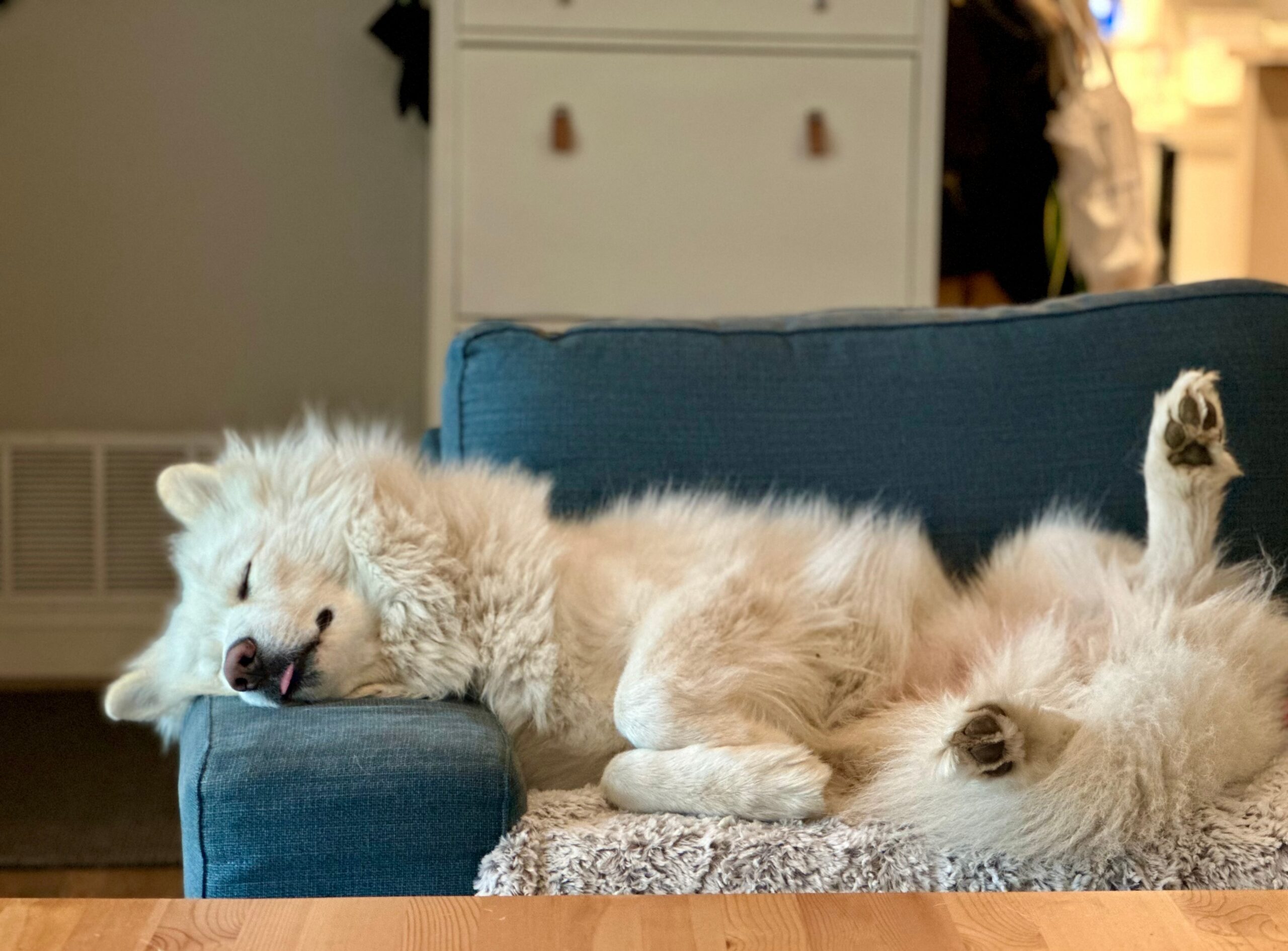
You glance at your dog, who hasn’t moved from the couch in hours, and wonder, “Is it normal for my dog to sleep all day?” If you’ve been concerned about a dog sleeping all day, veterinarians confirm the average adult dog sleeps 12 to 14 hours daily, so a dog sleeping a lot can be perfectly normal.
Of course, that number isn’t a hard rule. A high-energy Border Collie has different needs than a laid-back Basset Hound, and puppies or senior dogs can sleep up to 20 hours. (It’s not unusual to hear, “my dog sleeps 20 hours a day,” after a big outing.) A dog’s sleep habits often come down to their unique age, breed, and activity level. The key is distinguishing between a well-deserved rest and a sign that something is wrong, so you can feel confident about your dog’s health.
How Much Sleep Does Your Dog Actually Need?
A dog’s age is one of the biggest clues to their sleep needs. Puppies and senior dogs can sleep up to 18-20 hours a day — and that’s healthy! For puppies, sleep fuels their rapidly growing bodies and brains. For seniors, it’s about recovery, as their bodies have less energy and need more time to recover from daily activities.
Size and breed also play a role. Giant breeds like Mastiffs and Great Danes are famous for their marathon nap sessions, as their large bodies require more rest just to function. In contrast, many smaller terriers were bred for constant activity and often seem to have endless energy, needing less sleep to feel recharged. An old dog sleeping more than in years past may simply reflect lower activity and energy levels.
Finally, consider your dog’s recent schedule. A dog who spent Saturday hiking will naturally sleep more on Sunday to recover. This isn’t just physical; mental stimulation from a training session or a puzzle toy can be just as tiring, leading to more snoozing as their brain processes the day. For that reason, it’s not unusual if a senior dog sleeps all day after an especially busy outing.
A “normal” amount of sleep is a range, not one magic number. It’s a unique recipe based on your dog’s age, breed, and daily life. But if your dog hasn’t been especially active, all that napping might just be boredom.
Is Your Dog Napping… Or Just Bored?
If a healthy adult dog sleeps constantly despite getting enough exercise, the reason can be simple: they have nothing better to do. Without a “job” to occupy their mind, like sniffing new smells, solving a problem, or playing, many dogs will simply power down to pass the hours. Their world can become too predictable, especially if your household routine has settled into a quiet pattern.
A little change goes a long way. Providing new mental challenges, known as environmental enrichment, can wake up your dog’s brain and reduce boredom naps. You don’t need to dedicate hours; just a few small tweaks can make a huge difference. The goal is to give them a task that engages their natural instincts to sniff, chew, and think.
Easy Ways to Beat Boredom
- Upgrade a meal. Instead of a bowl, feed them one meal using a puzzle feeder or a snuffle mat. This turns a five-second gulp into a 10-minute brain game.
- Change the scenery. Take a different route on your daily walk. The new sights and smells are incredibly stimulating for a dog’s mind.
- Do a 5-minute drill. Spend a few minutes practicing a command they already know, like “sit” or “stay,” and reward them enthusiastically. It reinforces your bond and gives them a sense of purpose.
These simple additions can often bring a snoozing dog back to life. But if an old dog sleeps all day or you notice an elderly dog sleeping a lot even with enrichment, it might be time to consider other causes.
The ‘When to Worry’ Checklist for a Sleepy Dog
It’s one thing for your dog to be tired after a big day, but another entirely when they seem completely checked out. This is the crucial difference between a tired dog and a truly lethargic one. A tired dog will still wag their tail if you shake the treat bag; a lethargic dog seems too sluggish to care about anything, even their favorite things.
A sudden change in your dog’s energy is your first clue, but the real red flags appear when that sleepiness is part of a bigger picture. While more napping on its own is rarely an emergency, it becomes a significant concern when paired with other new behaviors. In an ‘elderly dog sleeps all day’ scenario, or if an older dog sleeps a lot without clear cause, the combination of signs tells a more urgent story.
Pay close attention if your dog’s sleepiness is accompanied by other changes. You know your dog best, and a gut feeling that something is “off” is worth investigating.
Call your vet if increased sleep is paired with:
- Sudden loss of appetite or refusal to drink water.
- No interest in things they once loved (like walks, car rides, or their favorite toy).
- Limping, stiffness, or trouble standing up from a lying-down position.
- Changes in bathroom habits, like accidents in the house, straining, or needing to go out more frequently.
- Whining, sudden irritability, or other uncharacteristic mood changes.
If you spot one or more of these signs, don’t wait and wonder. It’s time to call your veterinarian.
How to Talk to Your Vet About Your Dog’s Tiredness
The more precise you are, the faster your vet can zero in on potential medical reasons for tiredness, from hidden pain to hormonal imbalances.
Before you pick up the phone, try to pinpoint exactly what changed. Ask yourself:
- When did the sleepiness start?
- Was it sudden, or has it been creeping up for weeks?
- Do older dogs sleep more than they used to in your home?
Consider what else is different. A 13 year old dog sleeping a may be within normal limits for age, but sudden shifts deserve attention.
This level of observation gives your veterinarian a much clearer picture, especially when dealing with subtle changes in an older pet.
You’re the Expert on Your Dog: Trust Your Gut
You can now distinguish between a well-deserved rest and a potential concern by considering what’s normal for your dog’s age, breed, and activity level. You know that a long nap alone is rarely the issue; it’s the combination with other changes in behavior or appetite that warrants a closer look. If your old dog is sleeping more than usual and something still feels off after observing them, trust your instincts, as a call to your veterinarian is always the right move.
Meet the Doctor!
If you live in the Murphy, Texas area visit Dr. Justin Burgin, DVM and Owner of CityVet | Murphy, author of this blog. Book an appointment with Dr. Burgin now!
Call or visit us at CityVet to book your appointment.